



















▶ Arrive at each city's airport, check in, and depart for Madrid.
*Please arrive at the airport and check in 3 hours before departure time!
Madrid Arrival and meeting with a Korean-speaking guide.
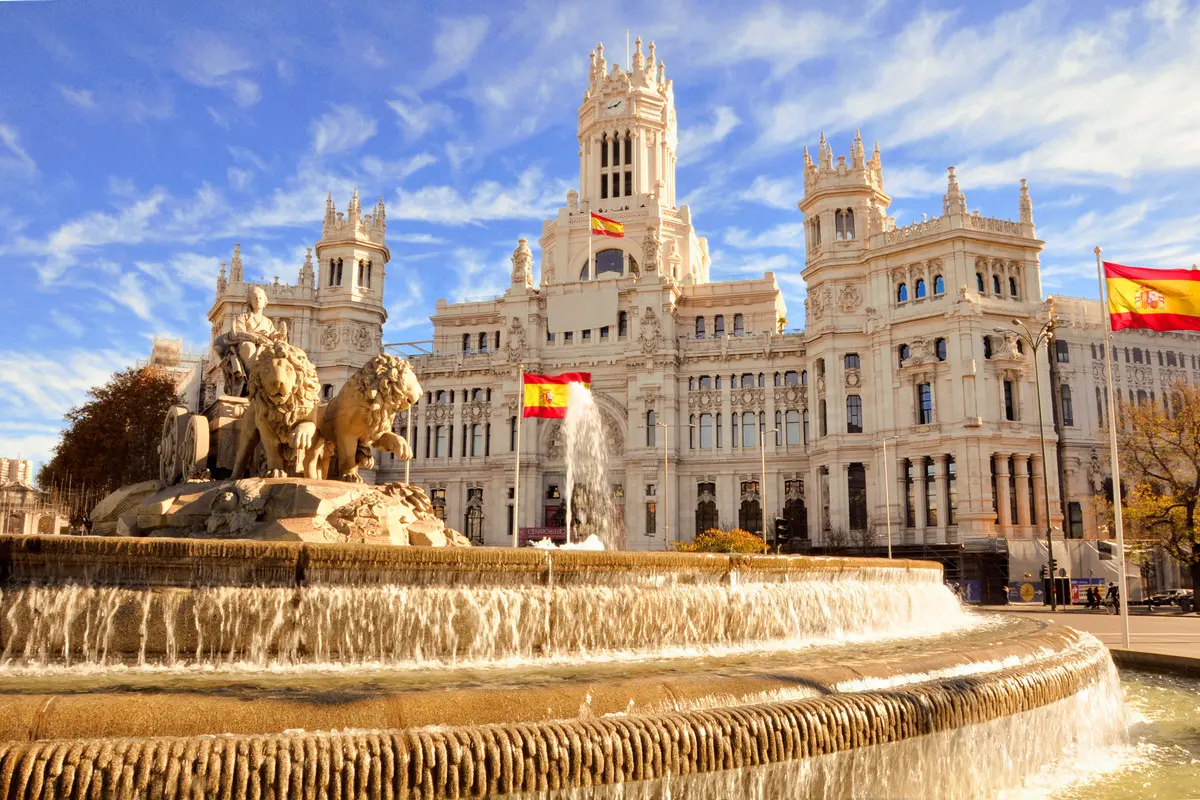
Madrid is the capital of Spain and the country’s political, economic, and cultural center, offering a unique blend of tradition and modernity. Its lively street culture and magnificent historic architecture provide visitors with a rich and diverse travel experience. The city is home to many renowned landmarks, including the world-famous Museo del Prado and the grand Royal Palace of Madrid, where visitors can experience the splendor of Spain’s royal heritage. With its spacious plazas, beautiful parks, and vibrant shopping streets, Madrid exudes a relaxed yet passionate atmosphere. By day, visitors can immerse themselves in culture and art, while at night the city comes alive with dazzling views and exceptional cuisine, making it a place where the true charm of Spain can be discovered.
Gran Vía A lively shopping and cultural street in central Madrid
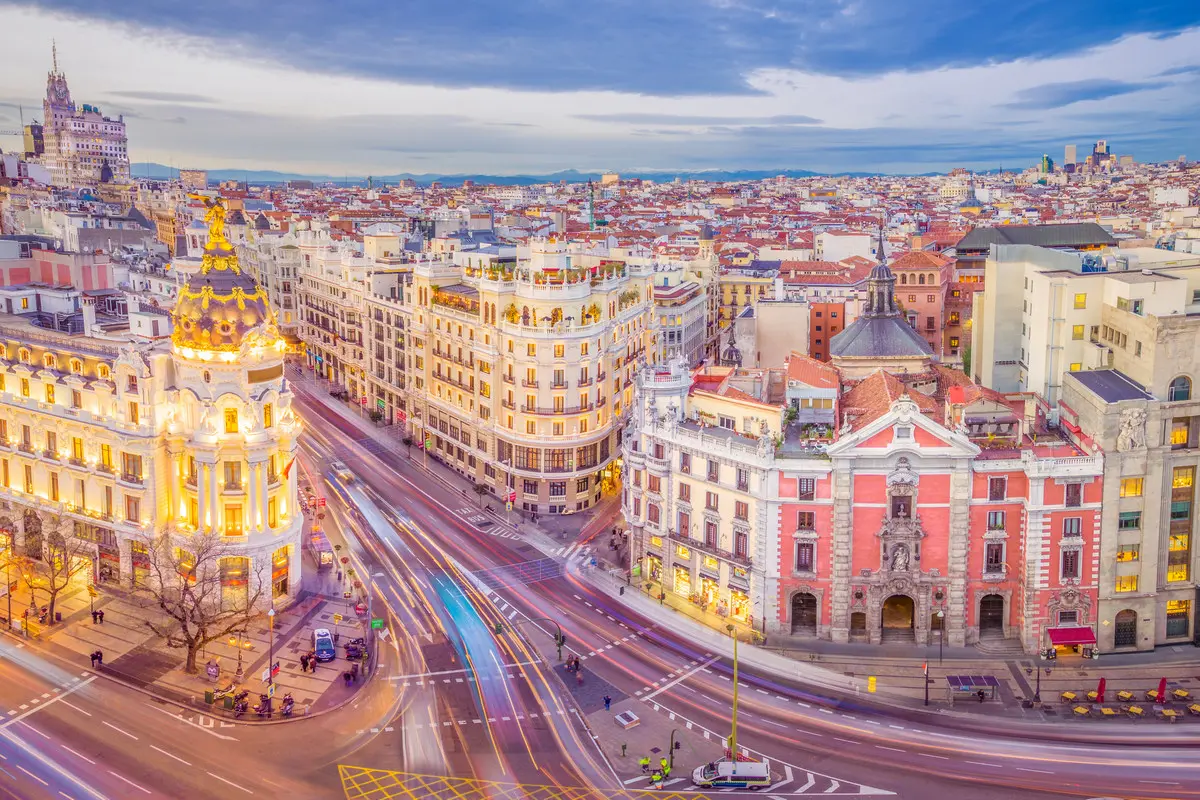
Gran Vía is a major bustling avenue running through the heart of Madrid, symbolizing the city with its vibrant atmosphere and striking architecture. Built in the early 20th century, the street is lined with theaters, shops, restaurants, and cafés, making it a lively destination at all times. During the day, visitors can enjoy shopping and sightseeing, while at night the illuminated signs and lights create a dynamic and energetic cityscape unique to Madrid. Gran Vía is a must-visit landmark where the city’s culture and modern urban vibe come together seamlessly.
Plaza Mayor A Square Where Madrid’s History and Culture Come Alive
Plaza Mayor is a historic square located in the heart of Madrid, built during the 17th century under the Habsburg dynasty. Surrounded by red-brick buildings and arched arcades, it features an equestrian statue of King Philip III at its center. Once a venue for royal events and markets, it is now a lively spot filled with cafés and shops, where visitors can experience the city’s history and vibrant atmosphere.
Museo del Prado (Prado Museum) A World-Renowned Museum Showcasing Spanish Masterpieces
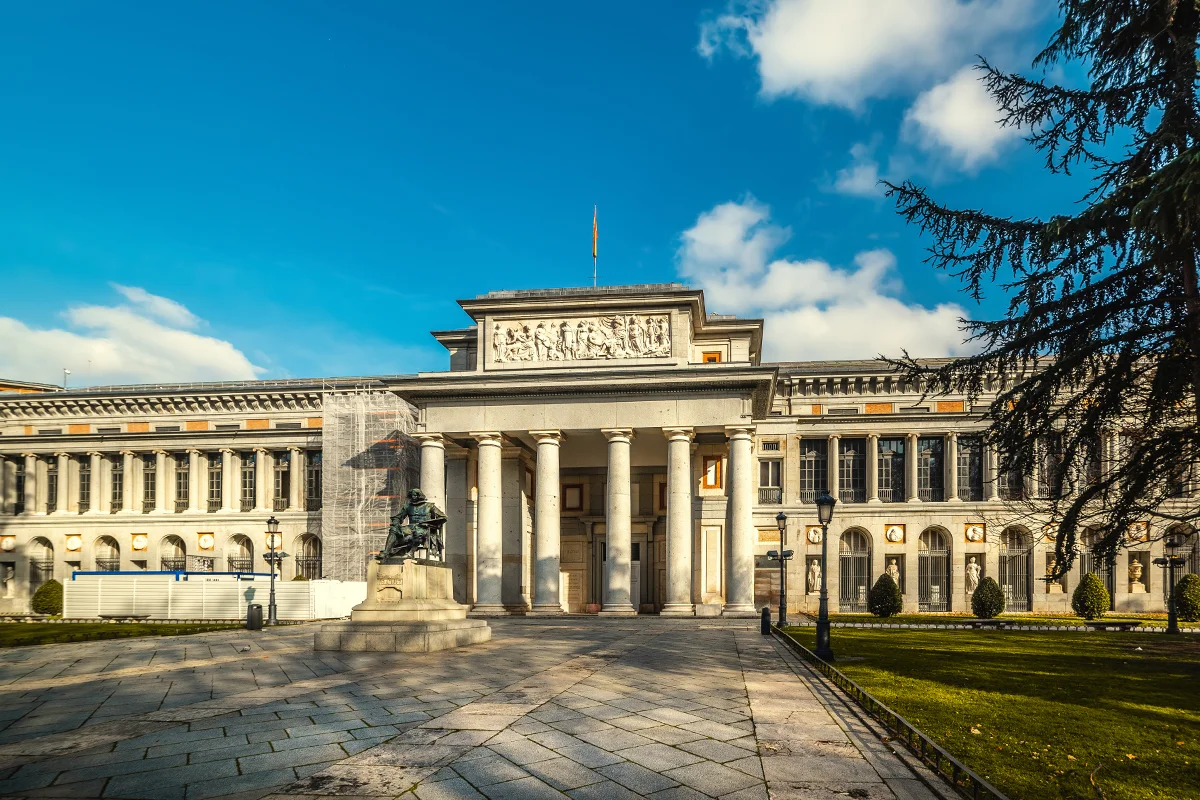
Museo del Prado (Prado Museum) is one of Spain’s most important cultural landmarks and a world-renowned museum located in Madrid. Opened in 1819, it was originally based on the Spanish royal collection and houses an extensive range of masterpieces from European art history. Visitors can admire works by Spain’s greatest painters, including Velázquez, Goya, and El Greco, as well as masterpieces from the Renaissance and Baroque periods. Blending art and history, the Prado Museum is a must-visit destination for art enthusiasts from around the world.
Plaza de España A spacious and beautiful square located in the west of Madrid
Plaza de España is a spacious and beautiful square located in western Madrid, serving as both a popular tourist attraction and a relaxing public space. At its center stands a monument dedicated to Miguel de Cervantes, along with statues of Don Quixote and Sancho Panza. Surrounded by high-rise buildings and green spaces, it is a vibrant cultural landmark enjoyed by both locals and visitors.
Check-in at the hotel after dinner
After breakfast, meet the guide
[★Special Feature] Royal Palace of Madrid Tour (Interior) A Splendid Palace of the Spanish Royal Family
Royal Palace of Madrid is the official residence of the Spanish royal family and one of the largest palaces in Europe, offering visitors a sense of both grandeur and opulence. Built in the 18th century, the palace features a harmonious blend of Baroque and Neoclassical styles. Its lavish banquet halls, impressive staircases, and intricately decorated rooms captivate all who visit. The palace’s extensive collection of artworks and royal artifacts provides a fascinating glimpse into Spain’s history and cultural heritage. Surrounding plazas and gardens offer leisurely walks and excellent photo opportunities, making the Royal Palace a symbolic landmark at the heart of Madrid’s historical and cultural center.
Consuegra A Village Charmingly Known for Its Windmills and Traditional Architecture
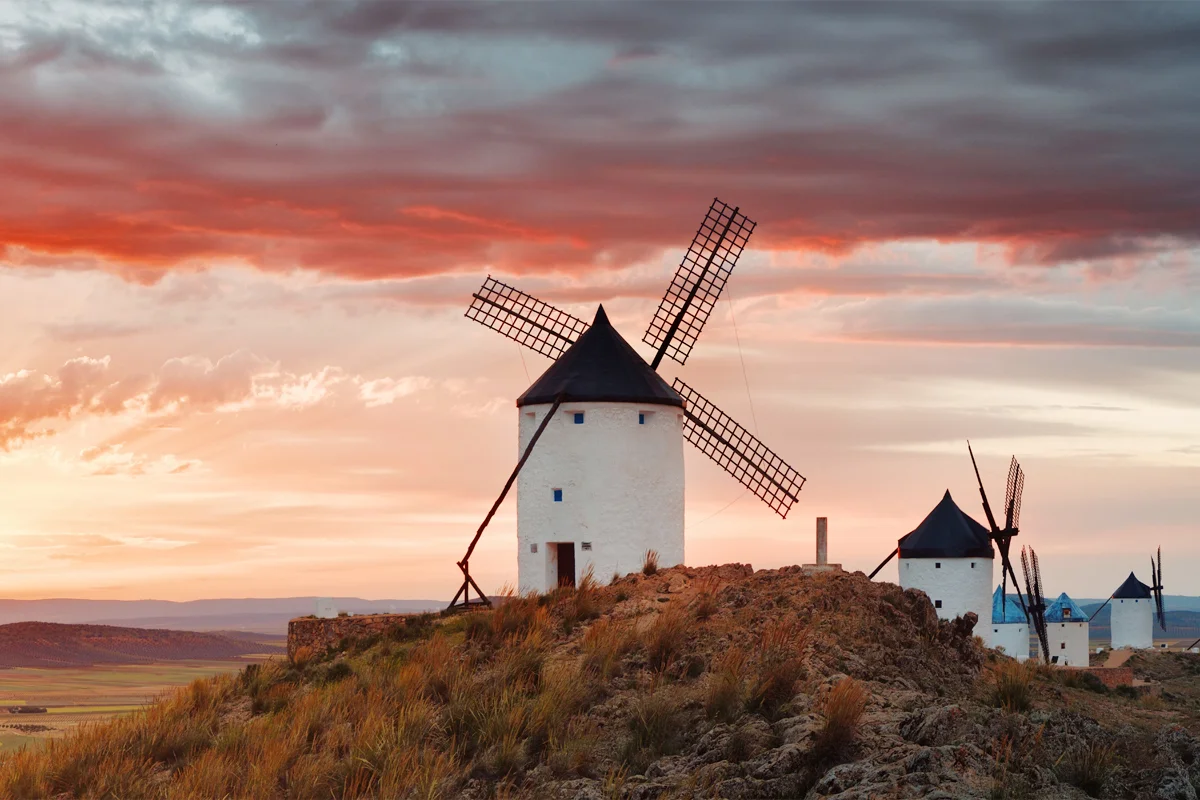
Consuegra is a traditional town located south of Madrid, Spain, known for its iconic windmills and historic architecture. Closely associated with Don Quixote, the windmills lined along the hilltop offer unique scenery and excellent photo opportunities. The town also features a medieval castle and charming narrow streets, allowing visitors to experience a traditional Spanish atmosphere. With local cuisine and peaceful surroundings, Consuegra is an ideal destination for a relaxing walk and cultural exploration.
Granada A City Where the Alhambra and Traditional Culture Come Alive
Granada is a historic city in the Andalusia region of Spain, known for its unique blend of Islamic and Christian cultures. The city’s iconic Alhambra Palace is famous for its intricate Moorish architecture and beautiful gardens, offering visitors a glimpse into medieval Islamic culture. In addition, historic sites such as the Generalife Gardens and Alcazaba are spread throughout the city, providing a variety of attractions for tourists. In the Albaicín district, with its narrow streets and traditional houses, visitors can experience Granada’s distinctive charm and cultural heritage. The city’s rich cuisine and lively street scenes add to the enjoyment of every visit.
[Optional] Granada Night View Tour Price : €50/pp
The night view of Granada is famous for its stunning scenery set against the backdrop of the Alhambra Palace and the Albaicín. As the sun sets and the city lights turn on, the historic buildings, narrow streets, and gardens create a romantic and enchanting atmosphere. Especially from the hilltop vantage points, the illuminated Alhambra highlights Granada’s rich history and cultural charm, offering visitors an unforgettable experience.
Check-in at the hotel after dinner
After breakfast, meet the guide
Alhambra Palace A Masterpiece Palace in Granada Featuring Intricate Moorish Architecture
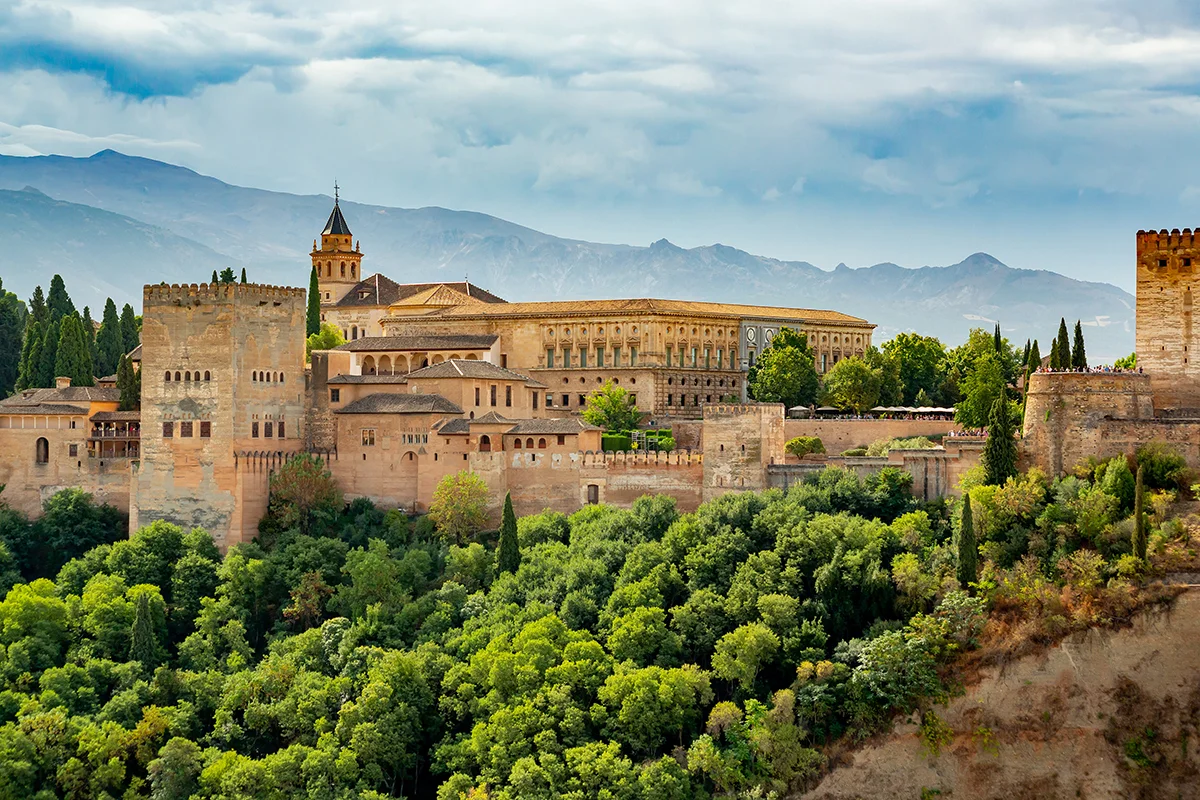
Alhambra Palace is a historic landmark in Granada, Spain, and a masterpiece showcasing the culture and art of the medieval Islamic dynasty. Its intricate Moorish architecture, ornate decorations, beautiful courtyards and fountains, and delicate carvings and mosaics captivate all visitors. Each space within the palace is designed to provide insight into the royal lifestyle and the essence of Islamic culture at the time. Along with the surrounding Generalife Gardens and Alcazaba, it stands as a central highlight of Granada tourism.
Generalife Gardens A Beautiful Garden Adjacent to the Alhambra Palace
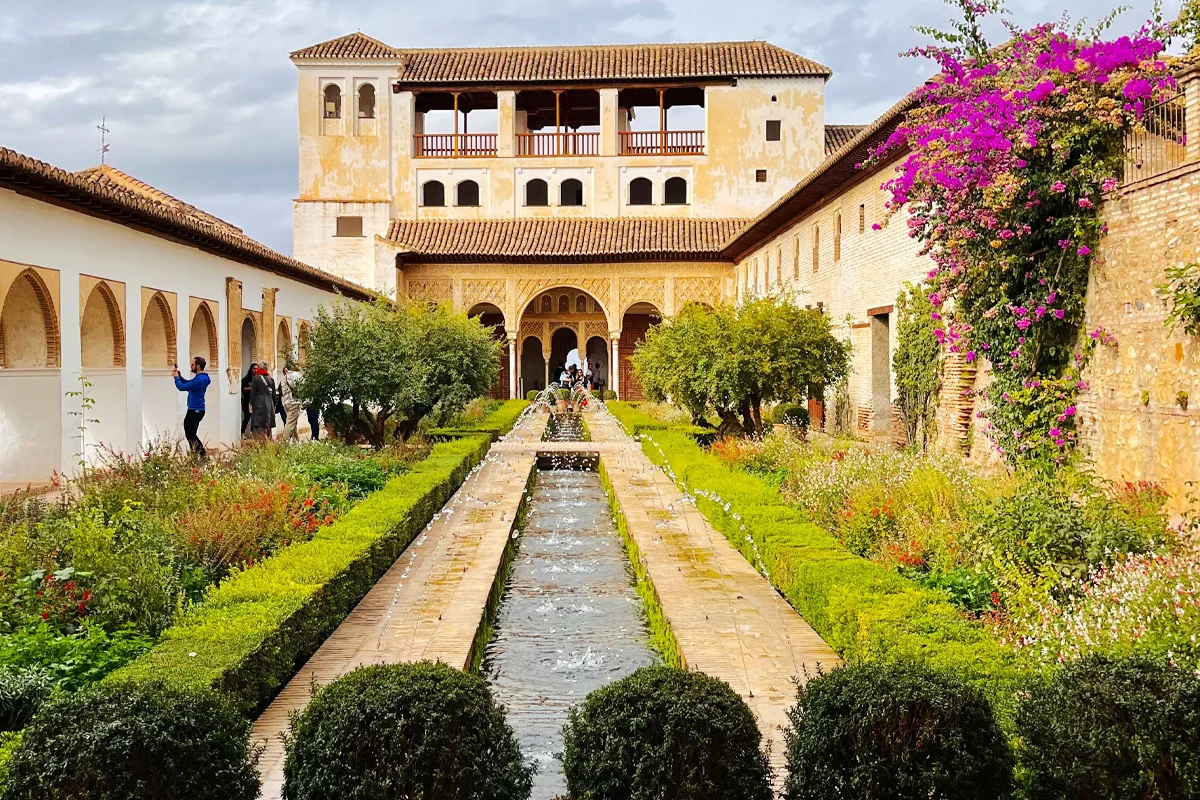
Generalife Gardens is a renowned attraction in Granada, Spain, often visited together with the Alhambra Palace. Originally created as a royal garden during the Islamic period, it features elegant fountains, lush greenery, and terraced walkways. Visitors can enjoy a peaceful atmosphere while admiring the harmony between nature and architecture. The Generalife once served as a retreat and venue for royal gatherings, making it a site of great historical and cultural significance.
Alcazaba An Ancient Islamic Fortress of the Alhambra in Granada
Alcazaba is an ancient Islamic fortress located within the Alhambra Palace in Granada, Spain. Built for city defense and military purposes, its thick walls and sturdy towers exemplify medieval military architecture. Perched atop a high hill, the fortress offers panoramic views of Granada. Visitors can explore its interior, appreciating both its historical significance and strategic importance, while enjoying stunning views of the Alhambra complex and the surrounding city. Alcazaba is an essential landmark for anyone visiting Granada.
Mijas A Charming Village of White Buildings and Narrow Streets
Mijas is a quintessential “white village” located in the Andalusia region of Spain, renowned for its whitewashed buildings and charming narrow streets. The village’s traditional architecture, set against stunning coastal views, offers visitors a unique and picturesque experience. Mijas is home to a variety of shops and restaurants where travelers can enjoy traditional Spanish cuisine and culture. Its cozy streets and quaint alleys provide perfect spots for leisurely walks and photography. Mijas is a popular destination where visitors can experience both Spain’s rich traditions and its beautiful landscapes.
Tarifa (Transit) The southernmost port city of Spain
Tarifa is a port city located at the southernmost tip of Andalusia, Spain, serving as a strategic gateway to Morocco across the Strait of Gibraltar. The city is famous for its coastline and water sports, and its strong winds make it a world-renowned destination for windsurfing and kitesurfing. Historic fortresses and medieval architecture remain, offering visitors a unique blend of cultural exploration and leisure activities. Tarifa is a captivating city where history, adventure, and scenic beauty come together.
Tangier A Port City Where History and Culture Coexist
Check-in at the hotel after dinner
After breakfast, meet the guide
Tangier A Port City Where History and Culture Coexist
Tangier is a strategic port city in northern Morocco, located along the Strait of Gibraltar, known for its rich history and diverse cultural heritage. Historically, it served as a key center for trade and diplomacy connecting Europe and Africa. The city blends traditional medina streets with modern avenues, museums, and cultural landmarks, creating a unique urban landscape. Visitors can stroll around the port and historic districts to experience Tangier’s distinctive atmosphere, while enjoying Moroccan cuisine and local culture at its vibrant restaurants and markets.
Fez A Traditional Moroccan City with Over a Thousand Years of History
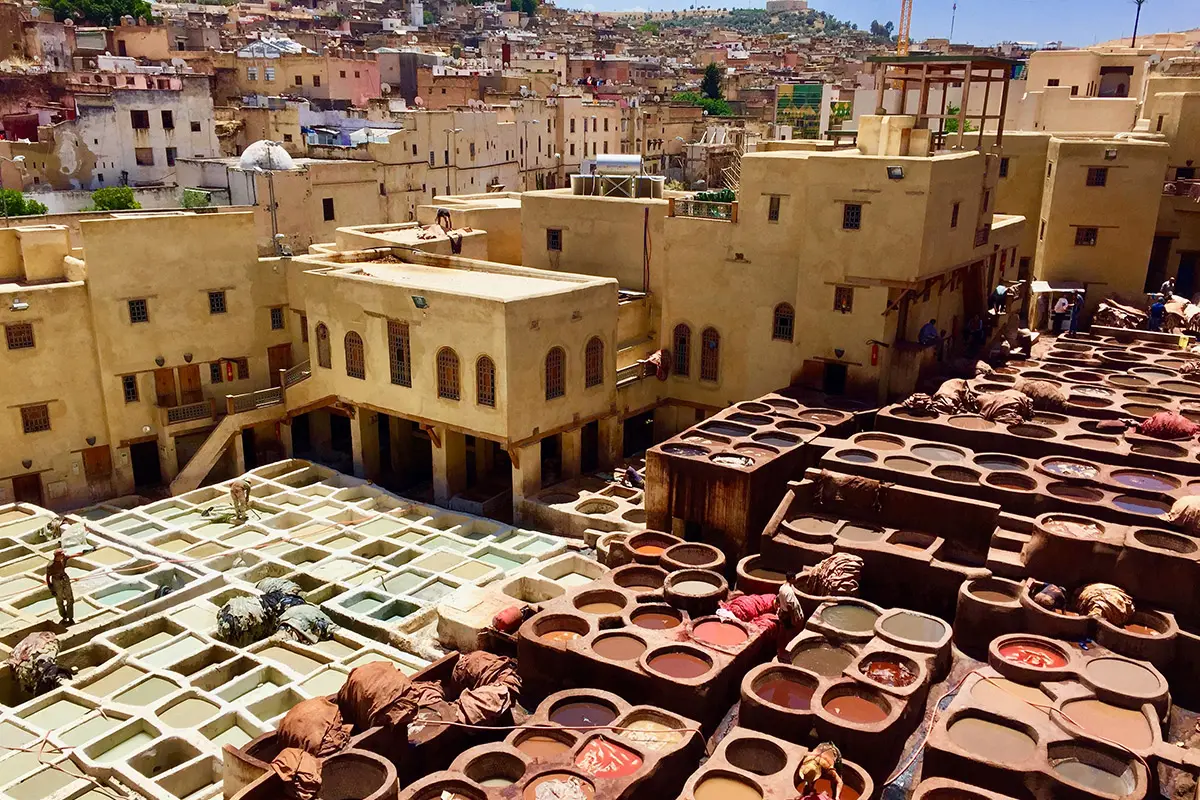
Fez is a historic city located in northern Morocco, known for preserving its rich medieval traditions and culture. It is especially famous for its vast maze-like old city, the Medina of Fez, which is recognized as a UNESCO World Heritage Site. The narrow alleyways, traditional markets, historic mosques and schools, and traditional leather tanneries vividly reflect Morocco’s authentic way of life and cultural heritage. Fez is also regarded as an important center of religion and learning in Morocco, offering visitors a unique atmosphere filled with deep history and tradition.
Medina of Fez The Traditional Medina of Fez with Maze-Like Alleys
Medina of Fez is the historic heart of Fez and one of the largest maze-like old cities in the world. Its narrow, winding alleys, traditional markets, ancient mosques and schools, and artisan workshops together showcase life in medieval Morocco. Designated as a UNESCO World Heritage Site, the Medina offers visitors the chance to experience traditional culture, architecture, and handicrafts, while also highlighting Fez’s significance as a center of religion and learning.
Royal Palace of Fez The Royal Palace of Fez with Ornate Golden Decorations
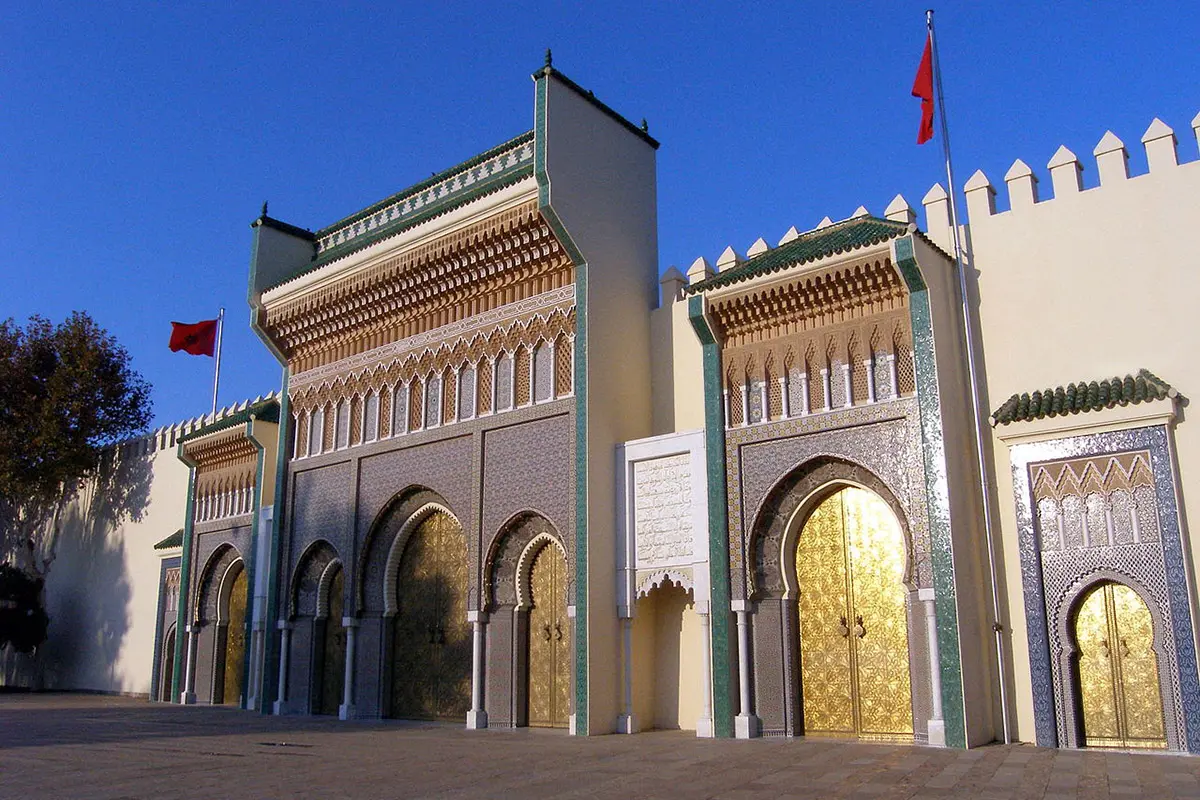
Royal Palace of Fez is a magnificent palace located in Fez, Morocco, renowned for its striking golden and green tile decorations. Built in the 9th century, the palace symbolizes the city’s history and authority, featuring intricate designs and medieval Islamic architectural elements that captivate visitors. While the interior is not open to the public, the grandeur and beauty of the palace can be admired from its exterior, surrounding squares, and walls. Situated within the historical context of Fez’s old city and Medina, it stands as an important cultural heritage site.
Chouara Tannery Historic Leather Dyeing Workshop
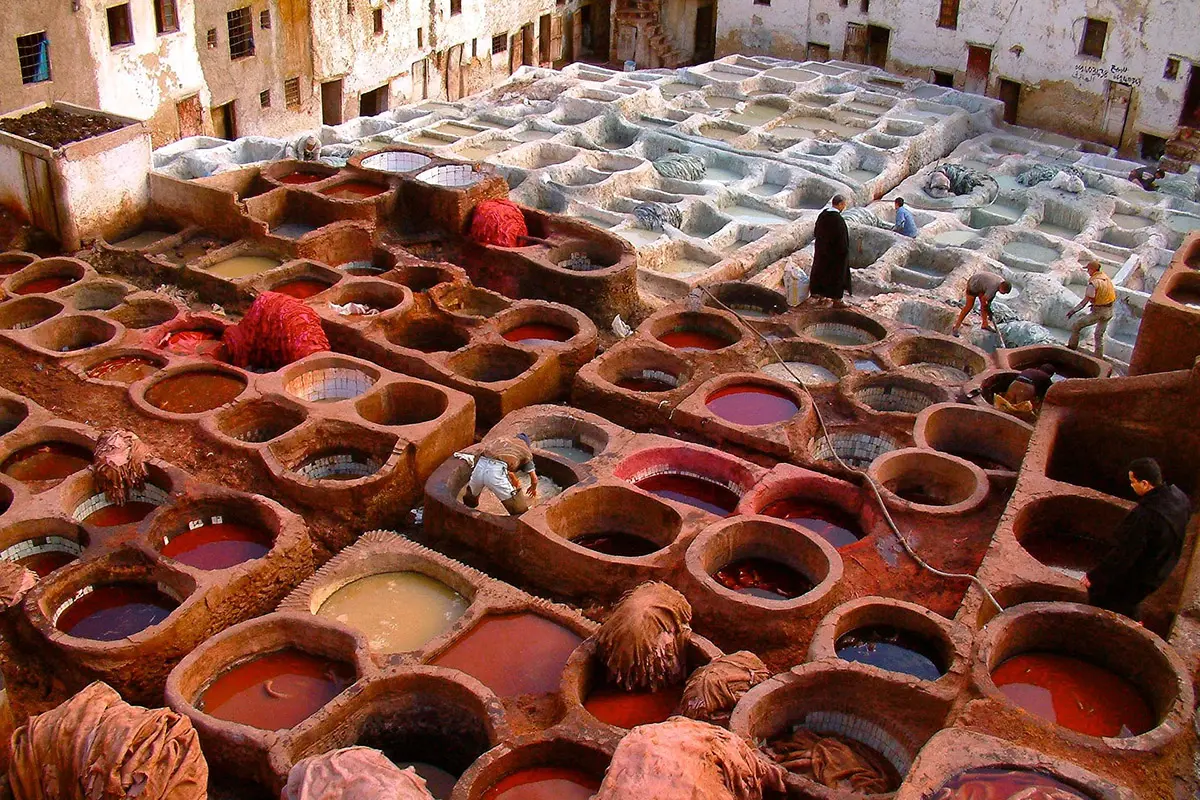
Chouara Tannery is a traditional leather dyeing workshop located in the Medina of Fez, Morocco, and is considered one of the oldest leather dyeing facilities in the world. Visitors can witness leather being dyed in large stone vats in vibrant colors, showcasing the craftsmanship and artisanal techniques of medieval Islamic times. The narrow alleyways and surrounding shops offer the opportunity to purchase leather products directly, making Chouara Tannery a prime destination to experience Morocco’s traditional industry and cultural heritage.
Casablanca Morocco’s Largest Economic Hub and Port City
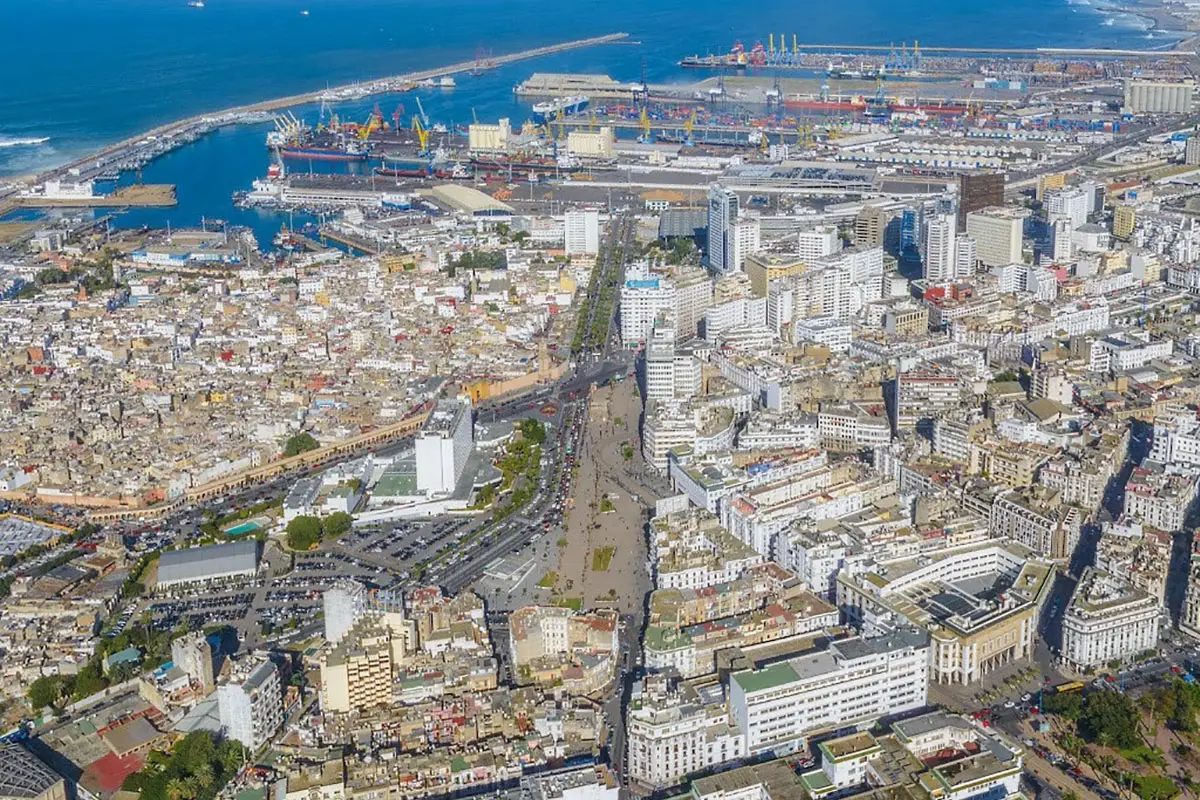
Casablanca is a port city on the Atlantic coast in central-western Morocco and the country’s largest city, serving as a major economic and industrial hub. The city features a mix of modern architecture and historic landmarks, with numerous financial institutions and corporate headquarters that drive business and industry. Casablanca’s expansive port, bustling markets, diverse restaurants, and cultural facilities also make it an attractive destination for visitors, offering a dynamic blend of commerce, history, and cultural experiences.
Mohammed V Square Historic Center of Casablanca
Mohammed V Square is a historic plaza located in the heart of Casablanca, Morocco, and is one of the city’s most iconic spaces. The square is surrounded by grand colonial-era buildings and government offices, reflecting the city’s administrative and historical significance. Visitors and locals alike enjoy strolling and relaxing in the square, while nearby cafés and shops offer a glimpse of Casablanca’s vibrant daily life. Mohammed V Square stands as a prominent landmark where the city’s culture and historical identity can be fully experienced.
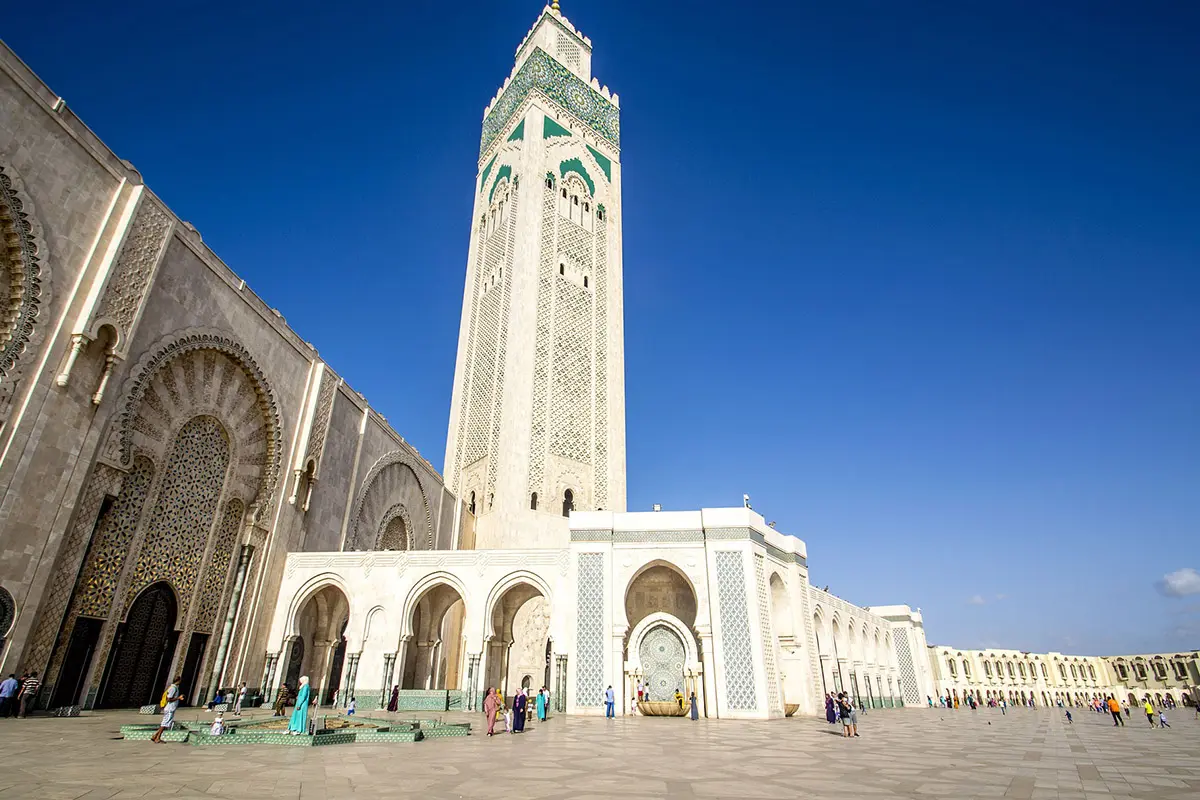
Hassan II Mosque One of the Tallest Mosques in the World
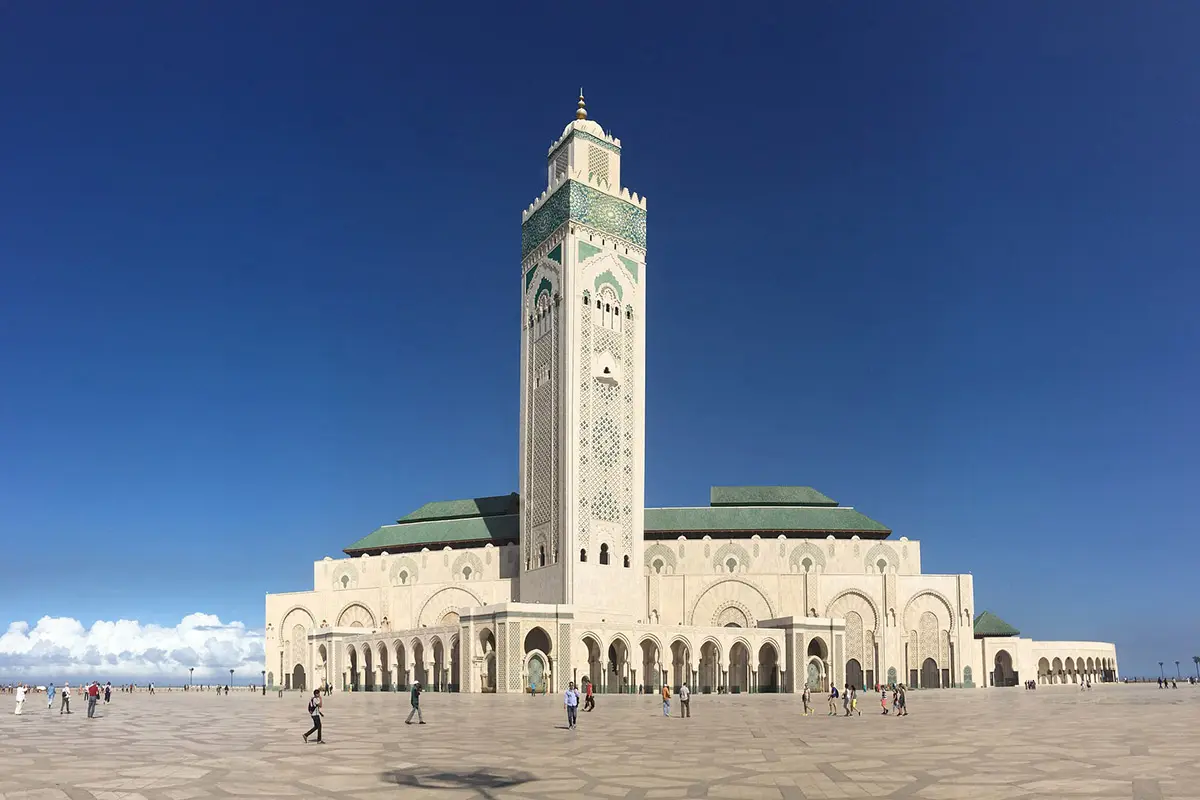
Hassan II Mosque is a magnificent Islamic mosque located in Casablanca, Morocco, featuring the tallest minaret in the world. Completed in 1993, the mosque is situated along the Atlantic coast, giving the impression that it floats above the water, and showcases a remarkable blend of traditional Moroccan architecture and modern engineering. Its interior is adorned with intricate decorations, arches, and mosaics, allowing visitors to appreciate the scale, artistic detail, and the rich Islamic cultural heritage of Morocco.
Check-in at the hotel after dinner
After breakfast, meet the guide
Rabat Morocco’s Capital and Political Center
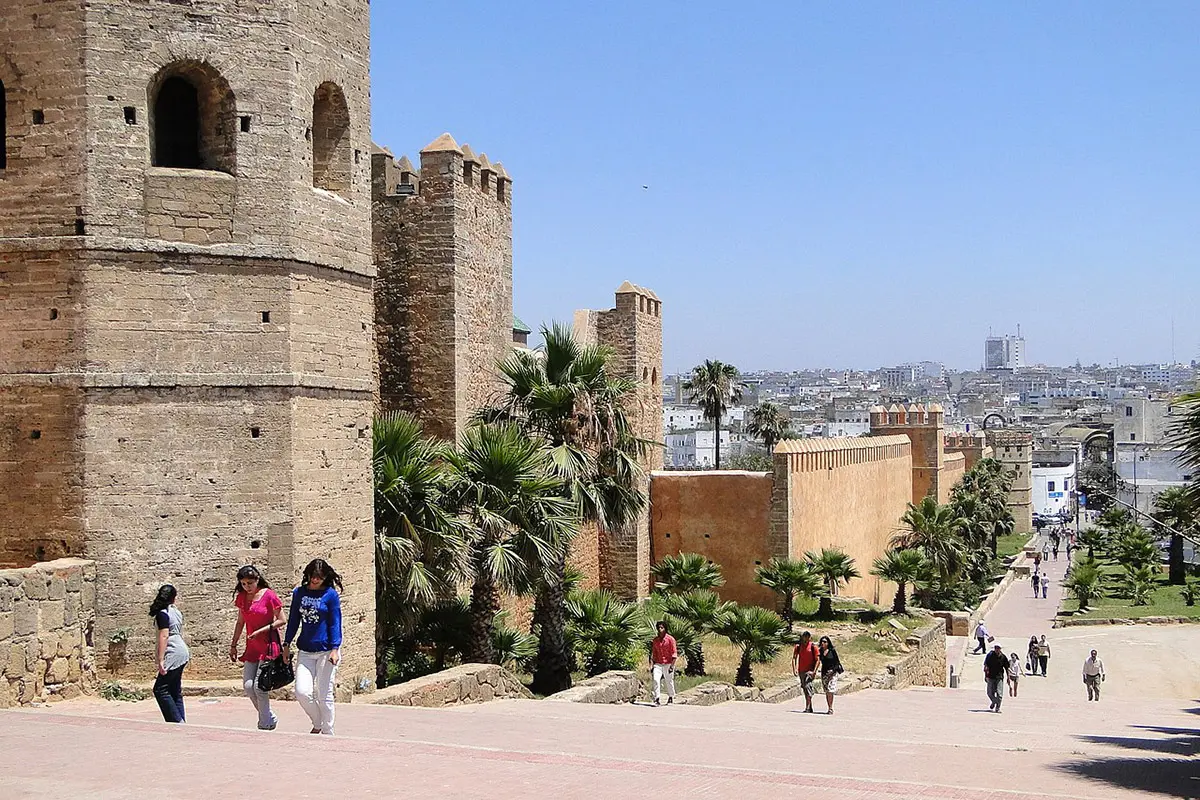
Rabat is the capital of Morocco and the country’s political and administrative center, home to numerous government offices and diplomatic missions. The city blends historic landmarks with modern architecture, reflecting the authority of the monarchy and the state throughout its streets. Key attractions include the Royal Palace of Mohammed VI, the Mausoleum of Mohammed V, and the unfinished Hassan Tower. Visitors can stroll through its squares and gardens, experiencing Morocco’s history and culture, while enjoying the city’s calm and distinguished atmosphere that makes it a charming destination.
Royal Palace of Rabat Majestic Residence of the Moroccan Monarchy
Royal Palace of Rabat is the official residence of the Moroccan monarchy, located in the heart of Morocco’s capital, Rabat. The palace features expansive gardens and elegant architectural design, symbolizing the authority and history of the royal family. While the interior is not open to the public, visitors can admire its grandeur and beauty from the exterior, surrounding squares, and gardens. The Royal Palace of Rabat serves as a historical and cultural centerpiece of the city, offering a glimpse into Moroccan royal heritage and traditional architecture.
Mausoleum of Mohammed V Majestic Royal Tomb in Morocco
Mausoleum of Mohammed V is the royal mausoleum located in Rabat, Morocco, housing King Mohammed V and his son, King Hassan II. Completed in 1961, the mausoleum is an impressive structure that combines traditional Moroccan architecture with Islamic decorative art, featuring marble and intricate tile work. Visitors can admire its ornate exterior and beautiful gardens, experiencing the historical and cultural significance of the Moroccan royal family. It is considered one of Rabat’s most prominent tourist attractions.
Hassan Tower Unfinished Historic Minaret in Morocco
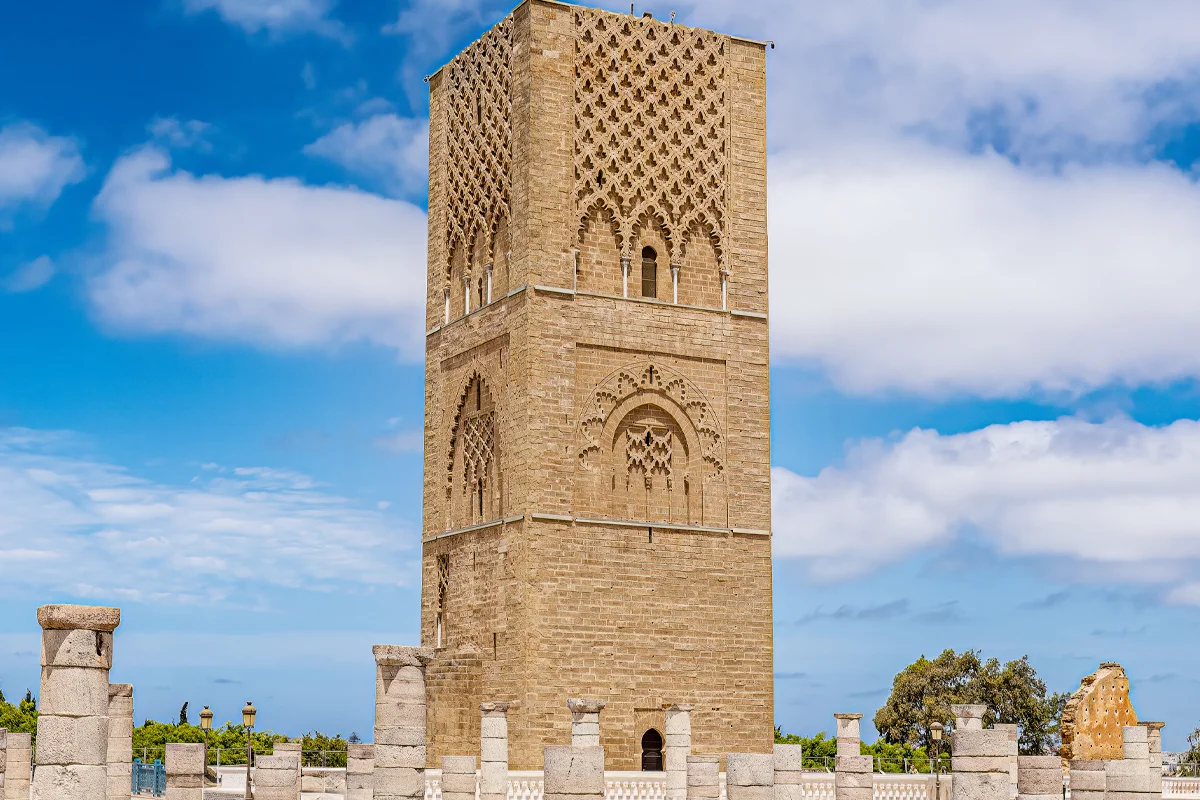
Hassan Tower is an unfinished historic minaret located in Rabat, Morocco. Construction began in the 12th century under Sultan Yacoub al-Mansour but was never completed, leaving the tower at about half its intended height. Built from red sandstone, it reflects the grandeur of Almohad architecture and once served as part of a planned grand mosque. Today, Hassan Tower stands alongside the Mausoleum of Mohammed V as an iconic historical landmark, offering visitors insight into Morocco’s rich architectural and cultural heritage.
Algeciras Spanish Port City Near the Strait of Gibraltar
Algeciras is a major port city in the Andalusia region of Spain, located near the Strait of Gibraltar, serving as a strategic and commercial hub. Its port is a key center for trade between Europe and Africa, handling both cargo and passenger transport. The surrounding area features a scenic blend of coastline and mountains, with thriving industrial and commercial activities linked to the port. Algeciras is not only an important economic and transportation center in Spain but also an attractive destination for visitors seeking coastal views and a taste of local culture.
Check-in at the hotel after dinner
After breakfast, meet the guide
Algeciras Spanish Port City Near the Strait of Gibraltar
Ronda Historic Town Perched on a Cliff
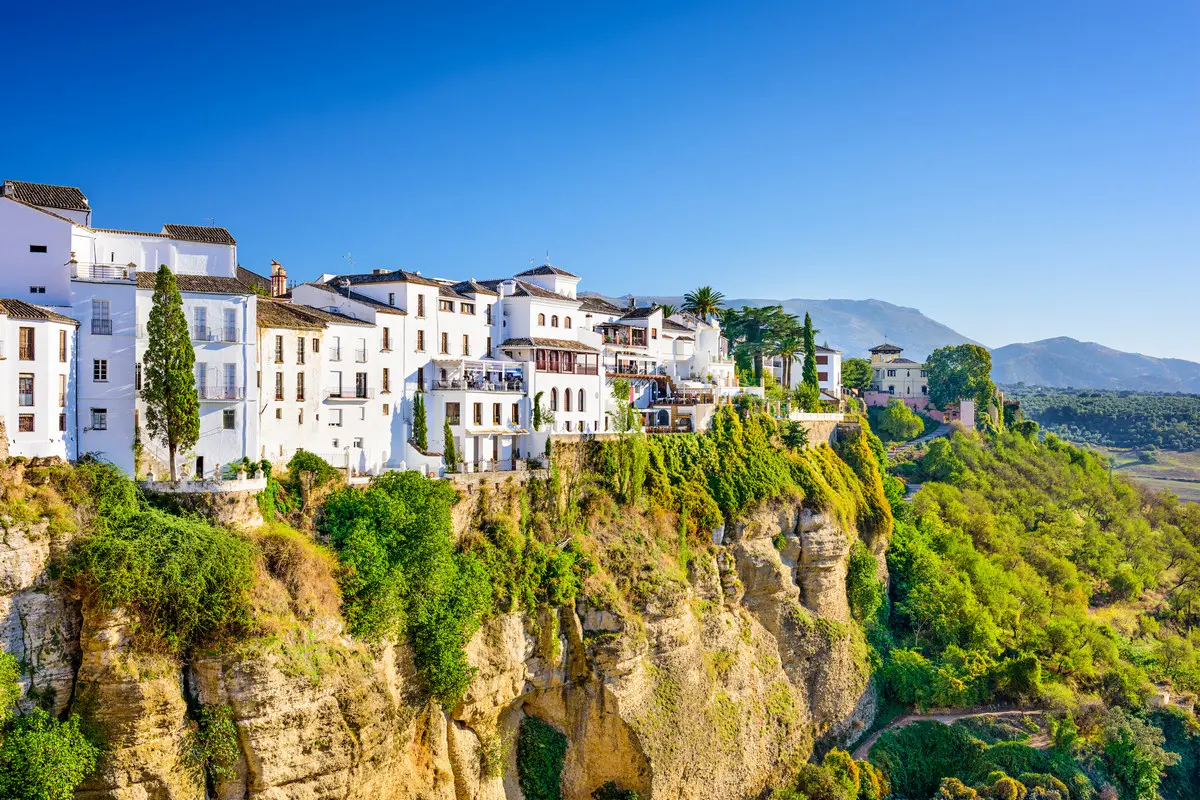
Ronda is a historic town in the Andalusia region of Spain, perched atop a deep gorge, offering a dramatic and unique landscape. The Puente Nuevo bridge, connecting the old and new towns, is the city’s iconic landmark. Well-preserved medieval walls and buildings allow visitors to experience Spain’s rich history and culture. Narrow streets, traditional plazas, and historic architecture create charming walking and photo opportunities, while the surrounding mountains and valleys provide breathtaking natural scenery, making Ronda a captivating destination.
Ronda Old Town Historic streets atop cliffs with stunning views.
Ronda Old Town is a historic city in the Andalusia region of Spain, perched atop cliffs and offering dramatic views. Its ancient walls, traditional houses, and narrow streets are well preserved, giving visitors a sense of medieval Europe. At the heart of the old town stands the Puente Nuevo, a bridge spanning the deep El Tajo Gorge, creating a spectacular sight. Cafés, restaurants, and souvenir shops are scattered throughout, making it ideal for both sightseeing and relaxation. This charming destination perfectly blends history and natural scenery.
Plaza de Toros de Ronda Bullring of Ronda, Spain
Plaza de Toros de Ronda is one of Spain’s oldest and most historic bullrings, built in the 18th century and a symbol of Ronda’s cultural heritage. Its elegant arched architecture and spacious circular arena highlight traditional Spanish bullfighting. Today, it also serves as a museum showcasing the history and traditions of bullfighting, offering visitors a unique opportunity to experience Spain’s cultural and historical legacy.
Sevilla The Cultural, Artistic, and Financial Hub of Andalusia
Seville is the vibrant capital of the Andalusia region in Spain, rich in history and culture. The city features a mix of Roman and Moorish architectural heritage, narrow winding streets, and lively plazas, allowing visitors to experience both traditional and modern Spanish life. Iconic landmarks such as Seville Cathedral, the Alcázar Palace, and the Giralda Tower are major tourist attractions, while flamenco performances and local festivals showcase the city’s energetic cultural scene. Strolling through the old town and along the riverfront offers visitors a unique blend of artistic charm and leisurely ambiance.
Barrio de Santa Cruz Historic District with Traditional Streets and Plazas in Seville
Santa Cruz District is a historic neighborhood located in the old town of Seville, Spain, known for its narrow, winding streets and charming plazas. Originally a Jewish quarter, the area features whitewashed buildings, quaint courtyards, and flower-adorned balconies, reflecting Seville’s unique atmosphere. Visitors can stroll through the alleys, enjoy traditional architecture, and explore local cafés and restaurants. Its proximity to major attractions such as Seville Cathedral and the Alcázar Palace makes Santa Cruz a central and captivating destination for exploring the city.
The Golden Tower(Torre del Oro) Historic Riverside Watchtower in Seville
The Golden Tower(Torre del Oro) is a 13th-century historic watchtower located along the Guadalquivir River in Seville, Spain. Originally built to control and defend access to the river, its name comes from the golden-colored tiles that once adorned its exterior. The tower exhibits a blend of medieval Islamic and Christian architectural styles. Today, it serves as a maritime museum, and visitors can enjoy panoramic views of the river and the city from its top. Torre del Oro is an iconic landmark of Seville, combining historical significance with scenic beauty.
María Luisa Park Beautiful Historic Park in Seville
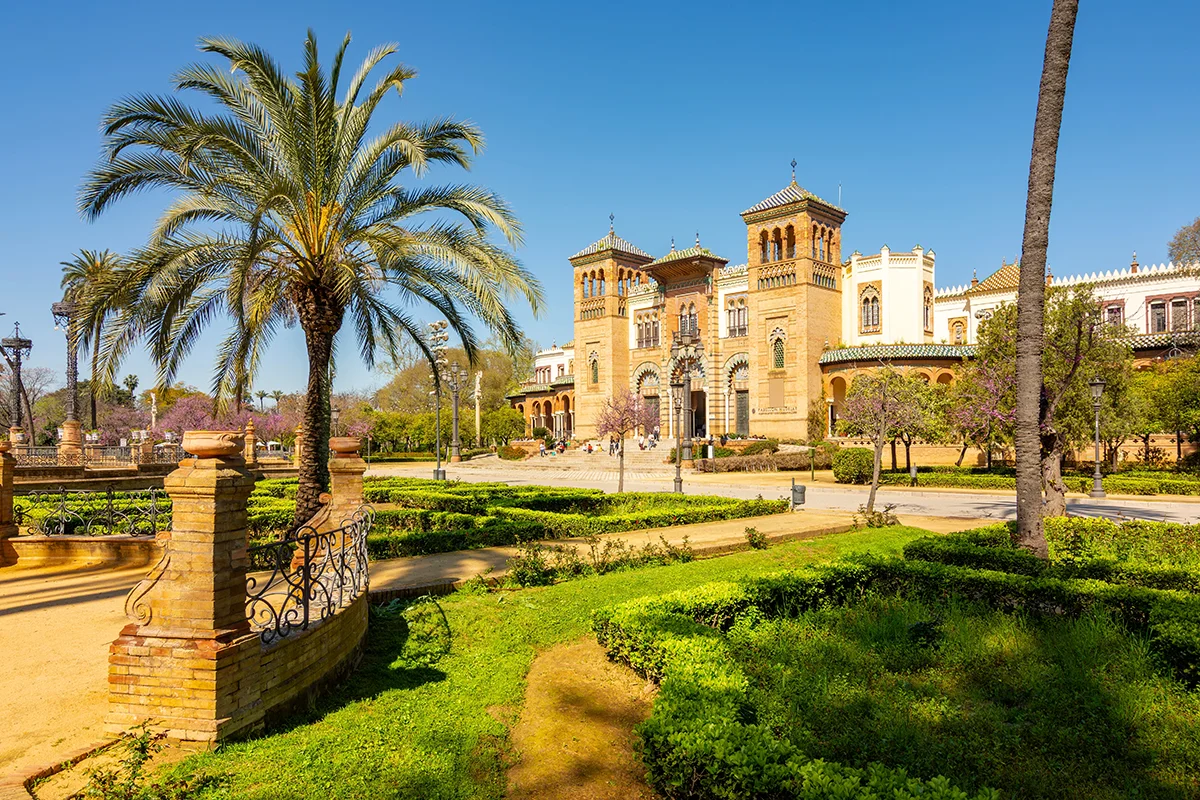
María Luisa Park is a historic and iconic park located in the heart of Seville, Spain. Established in 1914 on former royal grounds, the park features expansive green spaces, decorative fountains, elegant sculptures, and beautifully landscaped flower paths, offering visitors a peaceful and relaxing environment. The park also showcases Spanish architectural styles and Andalusian decorative elements, making it a popular destination for families, tourists, and anyone looking to enjoy a blend of culture and nature in the city.
Plaza de España Majestic Historic Square in Seville
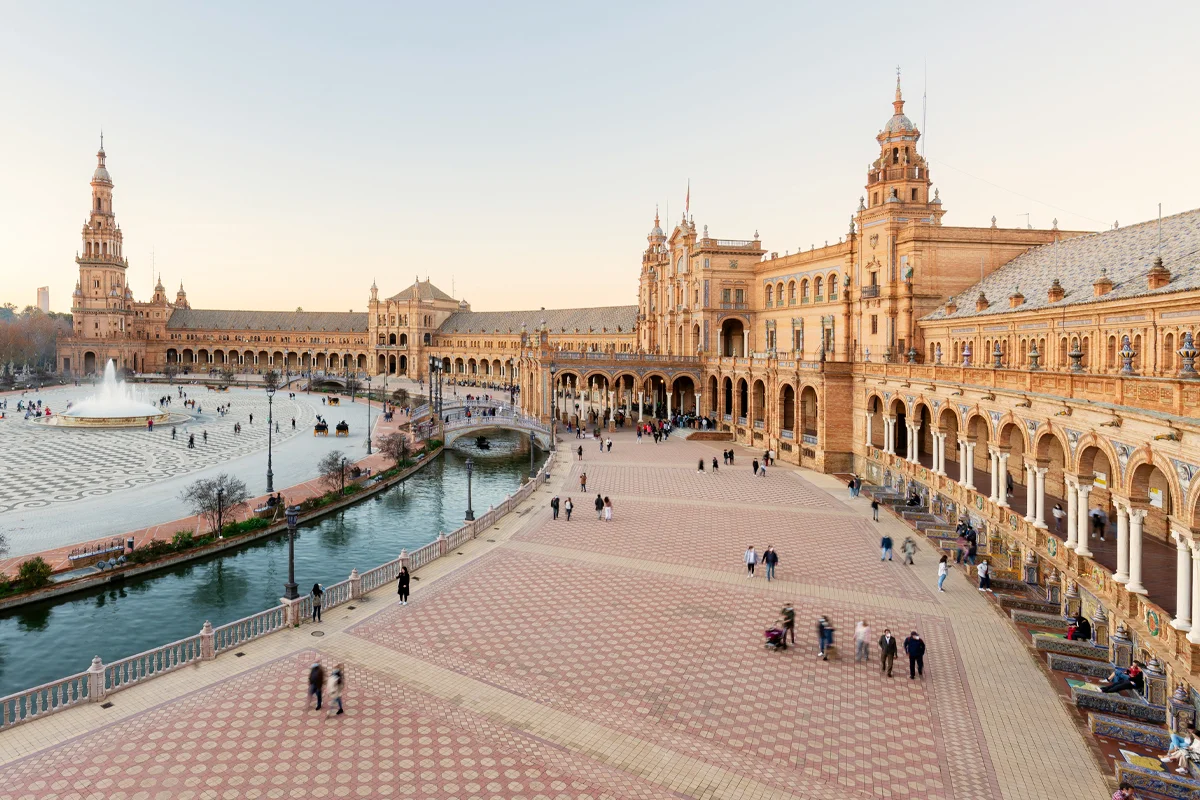
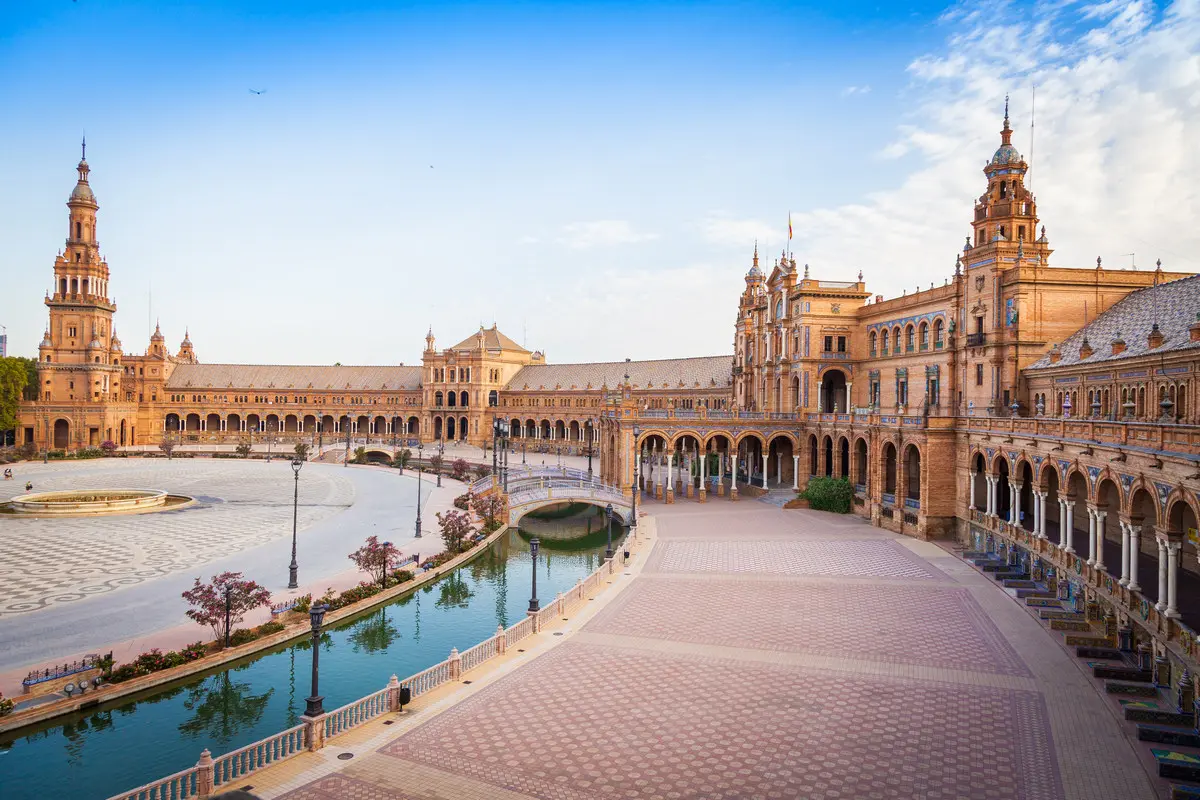
Plaza de España is a majestic historic square located in Seville, Spain, built in 1929 for the Ibero-American Exposition. Its semi-circular design, central canal, and arched galleries are adorned with colorful tiles representing Spain’s provinces. Visitors can stroll through the square, enjoy boat rides along the canal, and admire the stunning architecture and scenery. Plaza de España is a beloved landmark where visitors can experience the artistic, cultural, and historical essence of Seville.
Seville Cathedral One of the Largest Gothic Cathedrals in the World
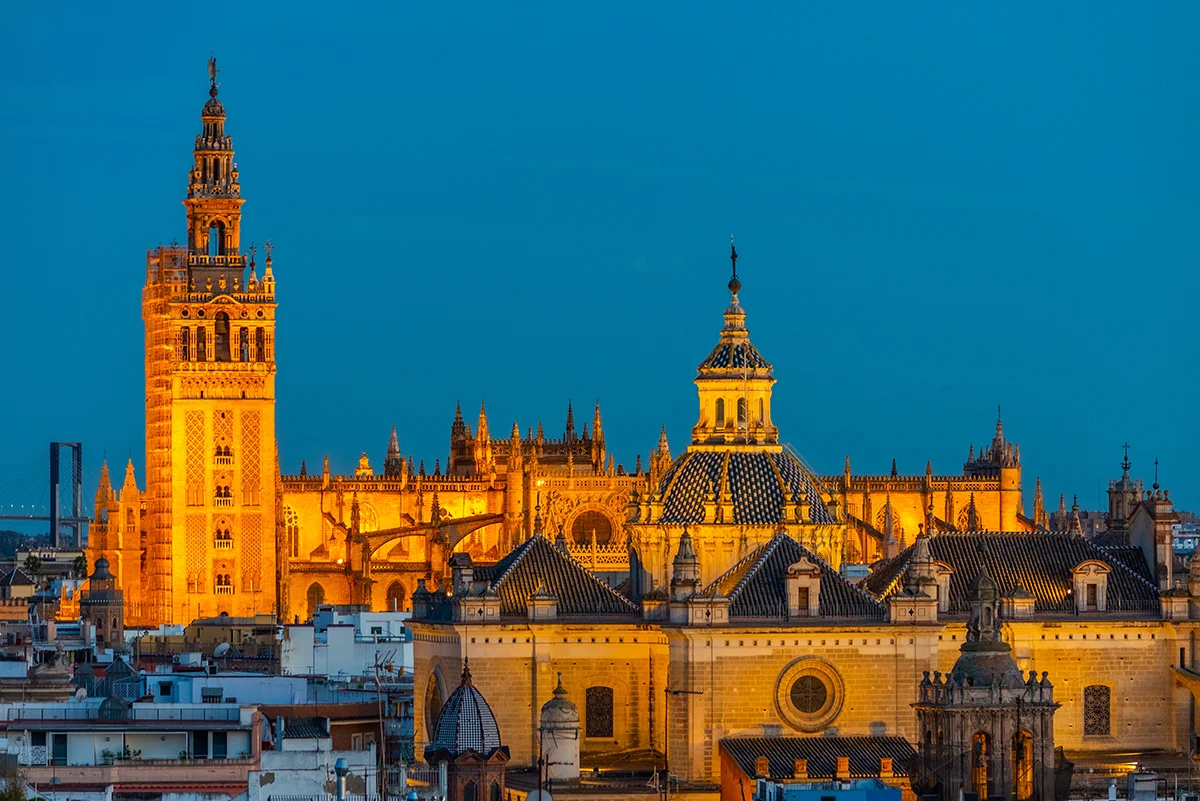
Seville Cathedral is one of the largest Gothic cathedrals in the world, located in Seville, Spain, and completed in the 15th century. Built on the site of a former mosque, it features soaring arches, stained glass windows, and intricate sculptural details. The cathedral houses the tomb of Christopher Columbus and various royal artifacts, while the Giralda Tower, attached to the cathedral, stands as an iconic symbol of Seville. Visitors can explore its interior to experience the grandeur of Gothic architecture and the rich religious and historical heritage of Spain.
[Optional] Horse-Drawn Carriage Tour in Seville Price : €60/pp
Horse-Drawn Carriage Tours is a popular way to leisurely explore the city’s historic landmarks, charming streets, and scenic plazas. Visitors can enjoy the picturesque narrow alleys and beautiful streetscapes in comfort, making it perfect for photography. The tour is appealing for both families and couples, offering a unique experience that captures the tradition and romantic atmosphere of Seville. It provides a memorable way to immerse oneself in the city’s culture and history while enjoying a relaxed and scenic ride.
[Optional] Flamenco Show Price : €70/pp
Flamenco Shows in Seville offer a vivid cultural experience of traditional music and dance from the Andalusia region. The powerful clapping, rhythmic footwork, guitar melodies, and passionate singing create an immersive atmosphere for the audience. Visitors can experience Spain’s traditional arts and regional culture firsthand, enjoying the sensory and passionate ambiance of Andalusia. Flamenco performances provide a unique opportunity to feel the energy, emotion, and cultural richness of this iconic Spanish art form.
Merida Spanish City with Ancient Roman Ruins
Check-in at the hotel after dinner
After breakfast, meet the guide
Merida Spanish City with Ancient Roman Ruins
Mérida is a historic city in the Extremadura region of Spain, renowned for its well-preserved ancient Roman ruins. Visitors can explore a variety of sites including a Roman theater, amphitheater, temples, and bridges, experiencing the grandeur of Roman civilization and architecture. Recognized as a UNESCO World Heritage Site, Mérida offers a unique opportunity to enjoy history, culture, and architectural beauty all in one destination.
Lisbon Coastal City of Culture and History in Portugal
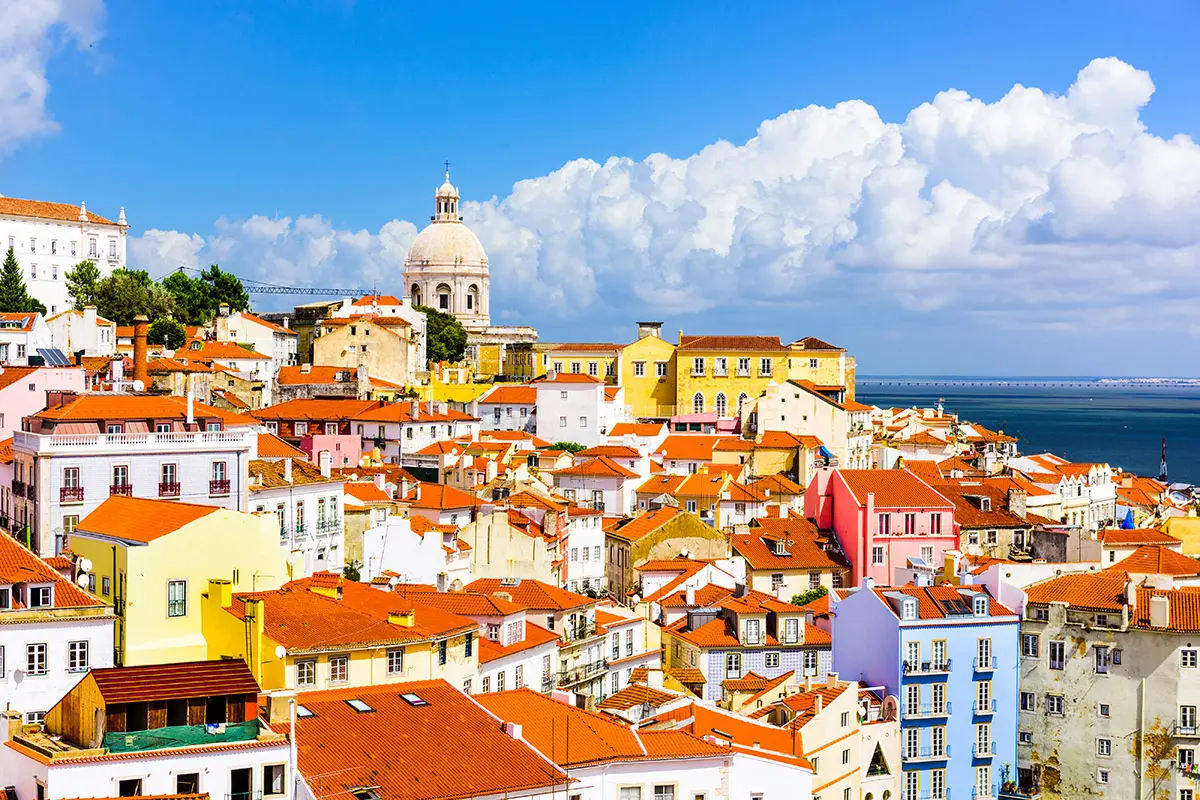
Lisbon is the capital of Portugal and a vibrant coastal city rich in culture and history, located at the mouth of the Tagus River along the Atlantic Ocean. Its historic old town features narrow streets, traditional tiled buildings, lively plazas, and modern avenues, offering visitors a unique urban experience. Iconic landmarks such as Belém Tower and Jerónimos Monastery, along with numerous museums, cafés, and culinary experiences, allow travelers to immerse themselves in Portuguese culture, heritage, and traditions, making Lisbon a captivating and memorable destination.
Parque Eduardo VII Scenic Central Park in Lisbon
Edward VII Park is a spacious urban park located in the heart of Lisbon, Portugal, featuring beautifully landscaped gardens, fountains, and walking paths. From the top of the park, visitors can enjoy panoramic views of the city and the Tagus River. It serves as a popular recreational space for both locals and tourists, offering a peaceful setting with a variety of trees and flowers throughout the year for leisurely walks and relaxation.
Marquês de Pombal Square Historic Central Square in Lisbon
Marquês de Pombal Square is a prominent roundabout and commemorative square located in the heart of Lisbon, Portugal. It was established to honor Sebastião José de Carvalho e Melo, the Marquis of Pombal, who led the reconstruction of the city after the 1755 Lisbon earthquake. At the center stands a statue of the Marquis, while major roads and nearby parks converge around the square, making it a key hub for traffic and city administration. It also serves as a popular spot for strolling and sightseeing, offering visitors a glimpse into Lisbon’s historical context and urban planning.
Praça do Rossio A historic site that has served as the city’s center since the 13th century
Rossio Square is a historic and iconic square located in the heart of Lisbon, Portugal, officially known as Praça Dom Pedro IV. Since the 13th century, it has served as the city’s central gathering place for public events, festivals, markets, and political activities, giving it significant historical and cultural importance. At its center stands a monument to King Dom Pedro IV, while surrounding cafés, theaters, and shops create a lively urban atmosphere. The square’s wave-patterned marble pavement, fountains, and traditional architecture offer visitors a unique opportunity to experience Lisbon’s rich history and vibrant culture.
Jerónimos Monastery Iconic Gothic-Manueline Monastery in Lisbon
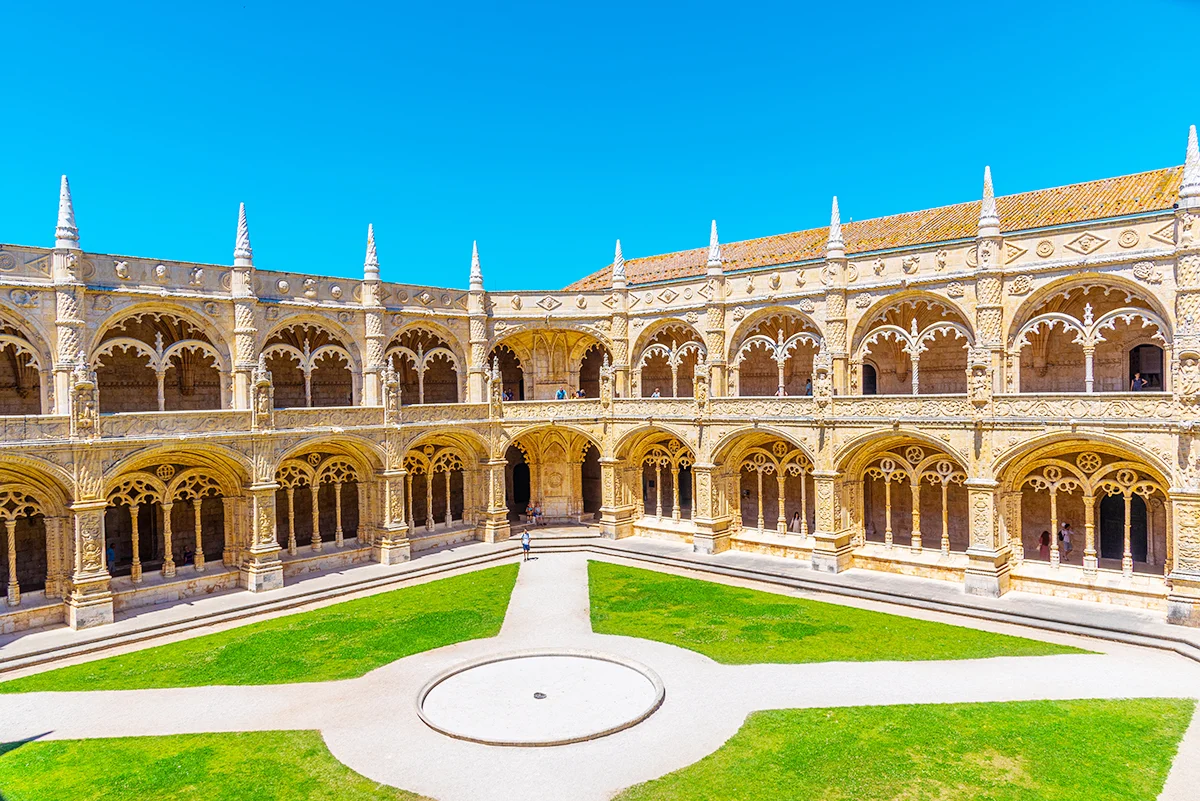
Jerónimos Monastery is a renowned monastery located in the Belém district of Lisbon, Portugal, built in the 16th century in the Manueline architectural style. Constructed to commemorate Portugal’s Age of Exploration, it features elaborate carvings and intricate arched cloisters. The monastery houses the tombs of Portuguese royalty and explorers, and its church and buildings hold significant historical and cultural value. Designated as a UNESCO World Heritage Site, Jerónimos Monastery is a must-visit landmark where visitors can experience Portugal’s rich history, architecture, and art.
Belém Tower Historic Riverside Fortress in Lisbon
Belém Tower is a 16th-century fortress located along the Tagus River in Lisbon, Portugal, built to protect the city and harbor during the Age of Exploration. Its Manueline architectural style and decorative details are remarkable, and visitors can enjoy panoramic views of the river and the city from its walls and tower. A UNESCO World Heritage Site, Belém Tower is a landmark attraction where travelers can experience both Portugal’s maritime history and architectural beauty.
[Optional] Tuk-tuk Price : €60/pp
Tuk-Tuks in Lisbon are a popular way to efficiently explore the city’s narrow streets and hilly areas. Using small electric or three-wheeled vehicles, visitors can comfortably tour major attractions such as Alfama, Baixa, and Belém. They offer a convenient and fun way to experience the city, making them an appealing choice for tourists.
Cabo da Roca Westernmost Cliffside Point of Continental Europe
Cabo da Roca is the westernmost point of continental Europe, located near Lisbon, Portugal. It is famous for its dramatic cliffs overlooking the Atlantic Ocean and breathtaking panoramic views. Once described by the poet Luís de Camões as “where the land ends and the sea begins,” the site offers a powerful sense of nature’s grandeur. A lighthouse and monument mark this iconic location, making it a memorable destination for visitors.
Fatima Major Catholic Pilgrimage Site in Portugal
Fátima is a world-renowned Catholic pilgrimage site located in central Portugal, where the Virgin Mary is said to have appeared in 1917. It has since become a major destination for pilgrims and visitors from around the world. The Sanctuary of Fátima, with its vast square and basilicas, symbolizes faith and peace, holding deep religious, historical, and cultural significance. Major pilgrimage events take place in May and October, attracting large crowds each year.
Chapel of the Apparitions Commemorating the 1917 Apparitions of the Virgin Mary
Chapel of the Apparitions is a small chapel built on the exact site in Fátima, Portugal, where the Virgin Mary is said to have appeared in 1917. It serves as a central place of devotion where pilgrims offer prayers and light candles to commemorate their faith. The chapel is surrounded by the pilgrimage square and the Basilica of Fátima, making it a major attraction for visitors from around the world.
Fatima Cathedral Heart of Pilgrimage and Peace
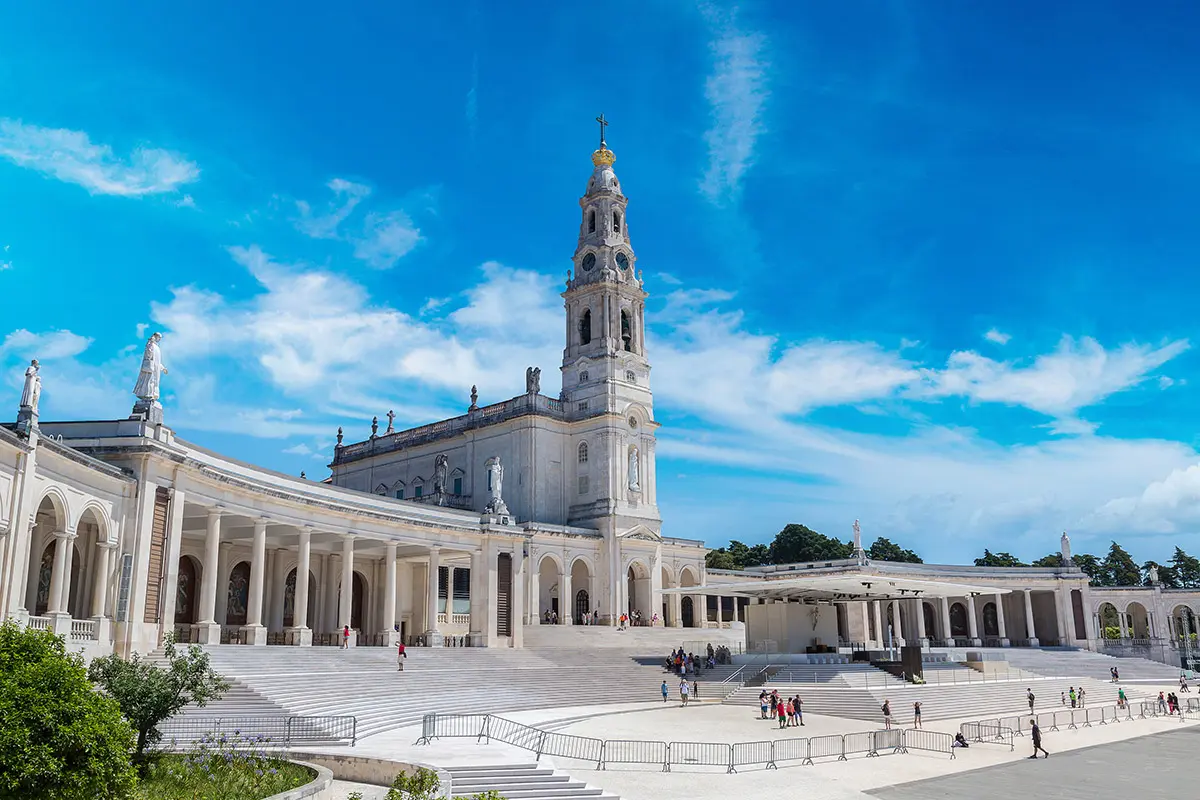
Fatima Cathedral stands on the sacred site where the Virgin Mary appeared to three children in 1917, making it a central place of pilgrimage. Every year, visitors from around the world come to pray and reflect, finding spiritual solace amidst the cathedral’s majestic architecture and serene atmosphere. The surrounding area features the Pilgrim’s Square, small chapels, and souvenir shops, offering a convenient and meaningful experience. It is a remarkable destination where faith and history come together, leaving a lasting impression on both families and individual travelers.
Fatima town center downtown Fatima
The town center of Fatima is a lively hub filled with shops, cafés, and restaurants, where pilgrims and tourists gather.
Check-in at the hotel after dinner
After breakfast, meet the guide
Fatima Major Catholic Pilgrimage Site in Portugal
Salamanca The city of the Plaza Mayor and its historic university.
Salamanca is a historic city in western Spain, known as a center of learning with one of Europe’s oldest universities, the University of Salamanca. Plaza Mayor, lined with cafés and shops, serves as a lively hub, while narrow streets reveal traces of medieval history, allowing visitors to experience the city’s culture with every stroll. Both day and night, Salamanca offers beautiful scenery and a vibrant atmosphere, making it a captivating destination for travelers.
The Roman Bridge of Salamanca The historic and charming Roman Bridge
The Roman Bridge of Salamanca, built during the Roman era, is an iconic landmark that reflects the city’s history and culture. Its sturdy stone structure blends beautifully with the surrounding scenery, making it a popular spot for photography. Open day and night, the bridge offers a unique charm, allowing visitors to experience both the past and present as they cross this historic pathway that has welcomed countless travelers for centuries.
Plaza Mayor in Salamanca A lively square at the heart of Salamanca’s Old Town.
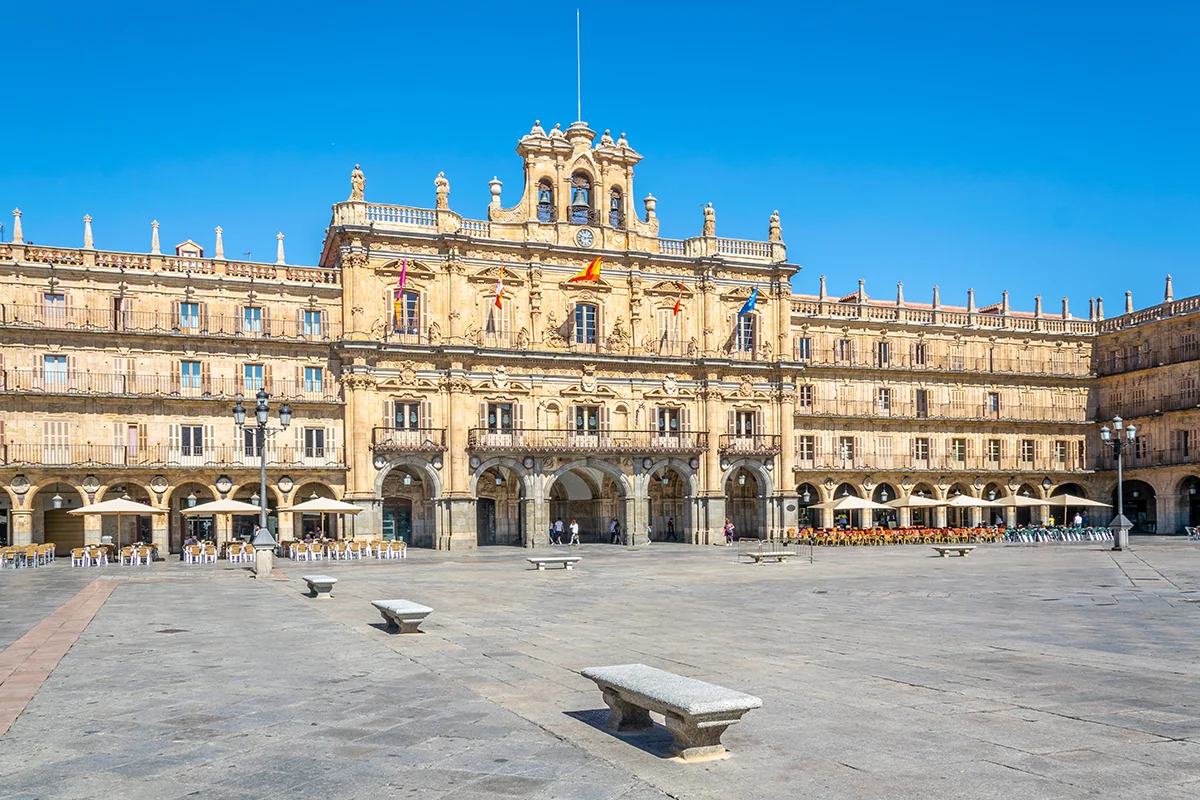
Plaza Mayor in Salamanca is a Baroque square located at the heart of the Old Town, bustling with both locals and tourists. Lined with cafés and shops, it offers leisurely strolls and relaxation by day, and a romantic illuminated atmosphere by night. With its historic architecture and lively surroundings, it is a must-visit landmark in Salamanca.
Casa de las Conchas A landmark famous for its shell-decorated façade.
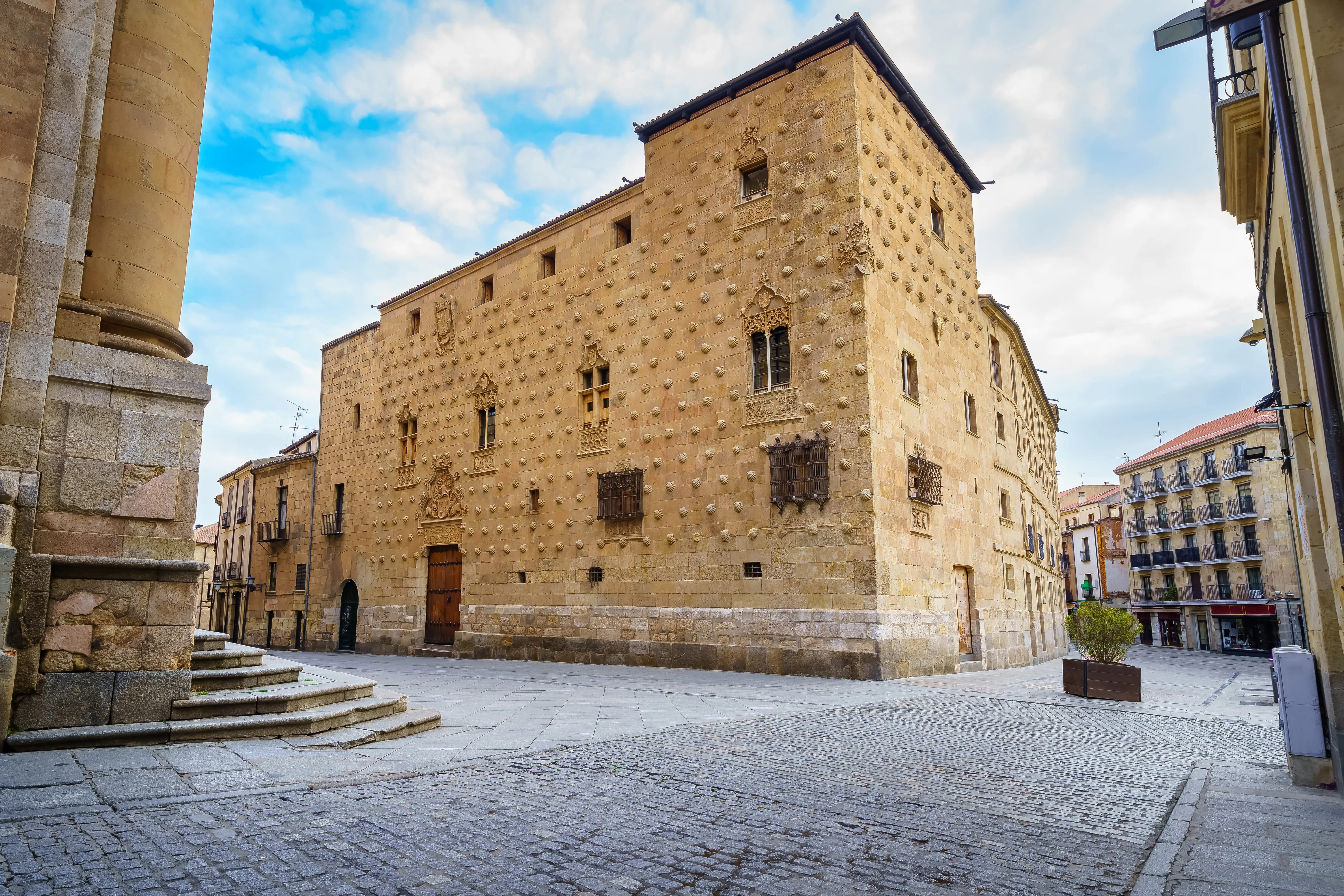
The Casa de las Conchas, or House of Shells, is a unique building located in Salamanca’s Old Town, renowned for its façade covered entirely with decorative shells. It features a harmonious blend of late 15th-century Gothic and Renaissance architecture and was once the residence of a noble family. Today, it serves as a library and exhibition space, making it a beloved landmark where visitors can experience both history and art.
Salamanca Cathedral Gothic-Renaissance cathedral in Salamanca, Spain
Salamanca Cathedral, located in the historic city of Salamanca, Spain, is a remarkable example of Gothic and Renaissance architecture. Famous for its intricate stone carvings, majestic towers, and stunning interior, it reflects centuries of religious and artistic heritage.
Universidad de Salamanca World-renowned university in Salamanca, Spain
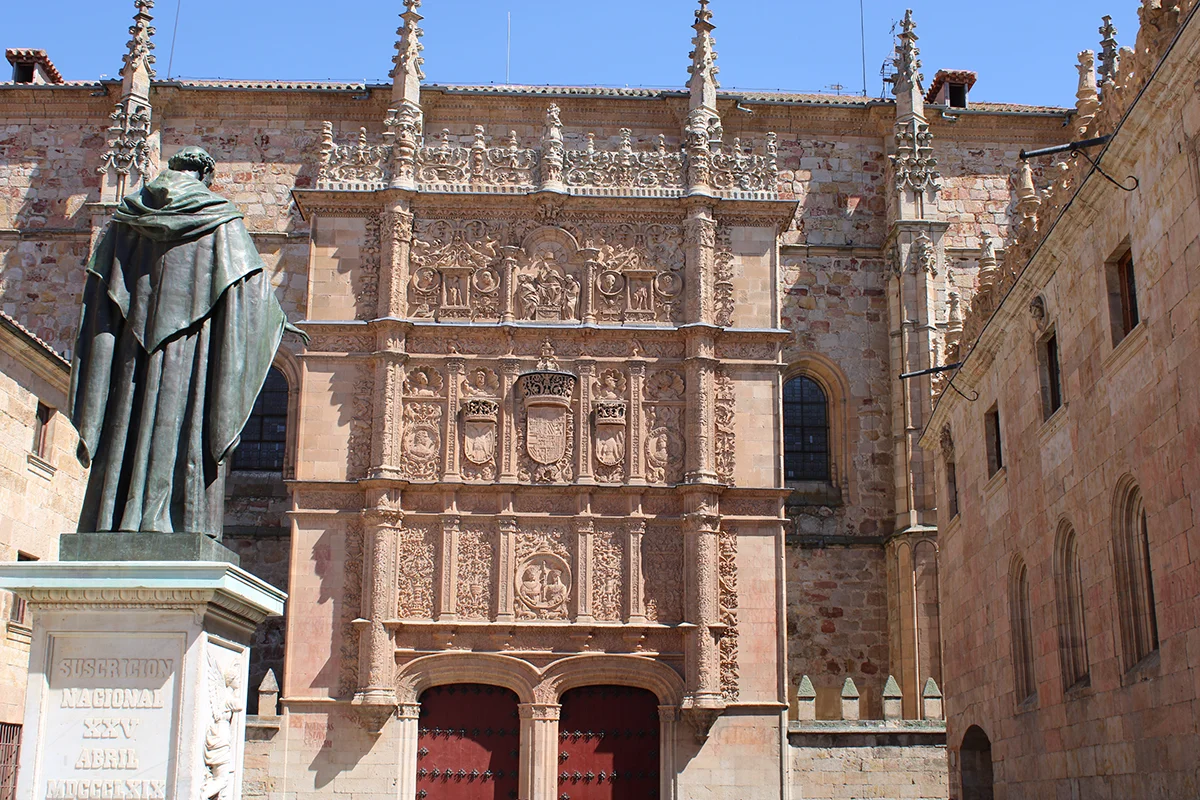
Located in Salamanca, Spain, University of Salamanca was founded in 1218 and is one of the oldest universities in Europe, boasting a rich history and tradition. It offers excellent education and research across humanities, law, and sciences, and is renowned worldwide for its beautiful Renaissance architecture and vibrant campus life.
Toledo A historic city rich in Spanish culture
Check-in at the hotel after dinner
After breakfast, meet the guide
Toledo A historic city rich in Spanish culture
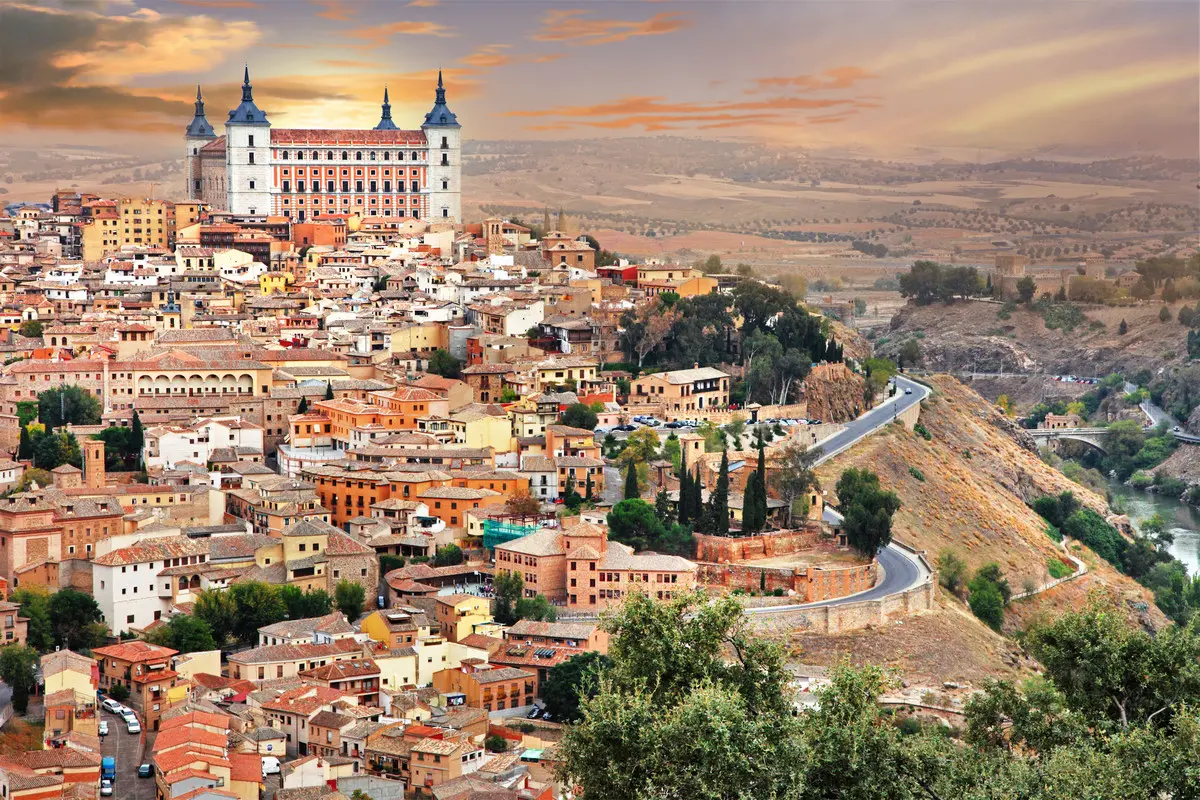
Located in central Spain, Toledo is a historic city where Roman, Islamic, Jewish, and Christian cultures converge. Famous for its charming medieval streets, city walls, magnificent cathedral, and traditional crafts and artworks, it offers a unique glimpse into Spain’s rich cultural and historical heritage.
Catedral de Santa María de Toledo Heart of Toledo, explore the majestic Gothic Cathedral
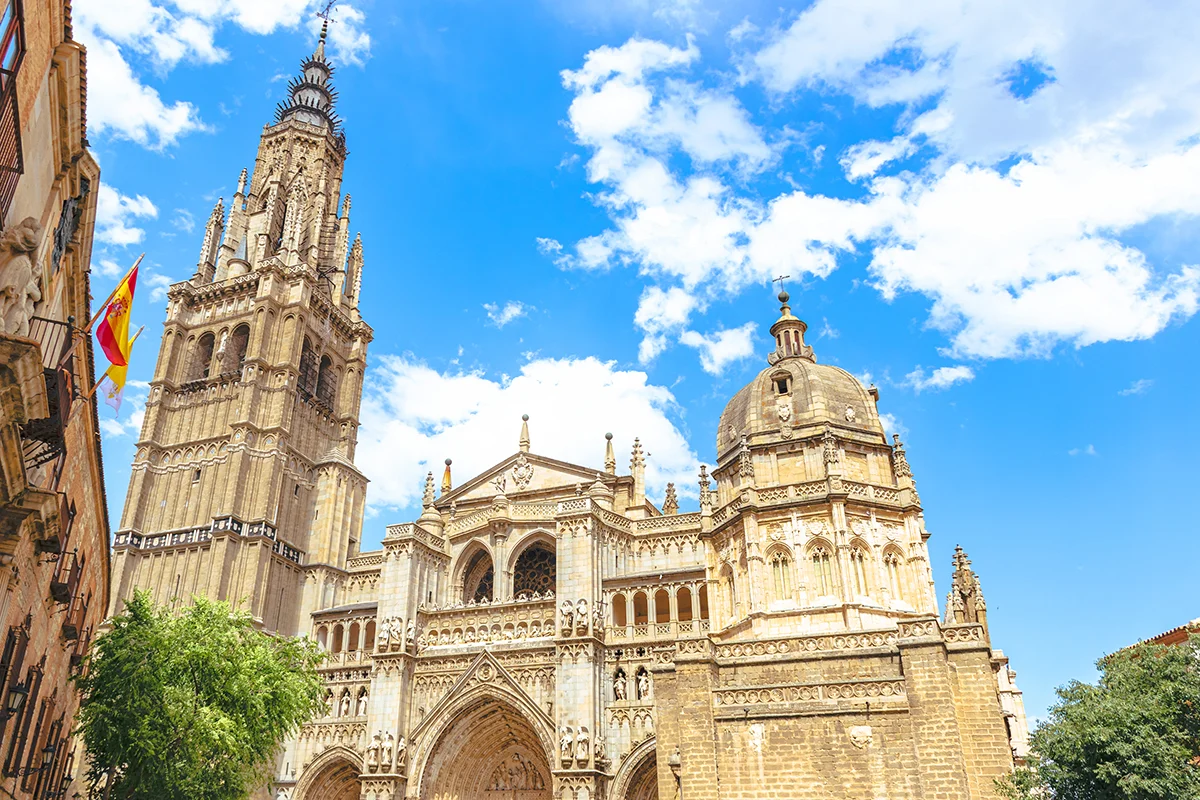
Located in the heart of Toledo, the Toledo Cathedral is a Gothic masterpiece begun in the 13th century and completed in the 15th. Its stunning stained glass, intricate sculptures, and towering spires impress every visitor, while the interior houses masterpieces by El Greco, Goya, and precious religious relics. Blending history and art, this cathedral is a must-visit landmark for anyone exploring Toledo.
Iglesia de Santo Tomé Church in Toledo housing El Greco’s masterpieces
Santo Tomé Church, located in Toledo, Spain, is a historic church renowned for housing El Greco’s masterpiece, The Burial of the Count of Orgaz. With its charming architecture and artistic treasures, it offers visitors a unique glimpse into Toledo’s rich history and cultural heritage, making it a must-visit landmark for art and history enthusiasts.
[Optional] Toledo Tourist Train Price : €30/pp
The Toledo Tourist Train offers a comfortable way to explore the city’s main attractions. It easily navigates narrow streets and hills, allowing visitors to enjoy Toledo’s historic buildings and scenic views with ease. It’s a popular option for families and tourists seeking a convenient city tour.
Madrid Spain’s capital, vibrant with culture and history
Check-in at the hotel after dinner
After breakfast, meet the guide
Madrid Spain’s capital, vibrant with culture and history
Transfer to the airport for your flight to Barcelona.
Barcelona Coastal city famed for Gaudí architecture and art
Abadia de Montserrat Home to the Black Madonna
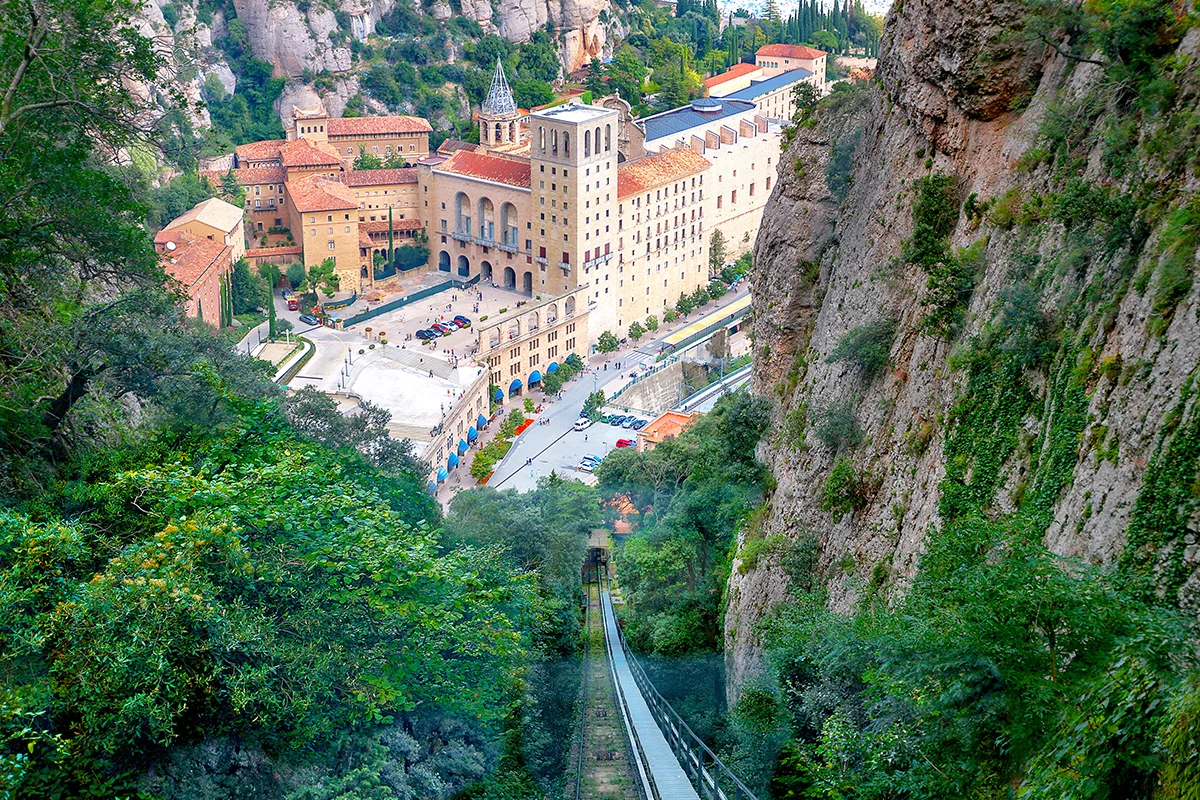
Montserrat Monastery, located on Montserrat Mountain in Catalonia, Spain, is a historic Benedictine monastery and a major religious pilgrimage site dating back to the Middle Ages. It is famous for the Black Madonna, known as La Moreneta, and is nestled among stunning mountain landscapes and unique rock formations, offering visitors both spiritual serenity and natural grandeur. The monastery also features a choir and a museum, allowing guests to experience its rich cultural and artistic heritage.
[Optional] Montserrat Rack Railway (Round Trip) Price : €40/pp
The Montserrat Rack Railway is a representative mountain train that takes visitors up to the Montserrat Monastery in Spain, safely climbing the steep slopes using a rack-and-pinion system. Along the way, passengers can enjoy breathtaking views of dramatic rock formations and the Catalonian plains, making the journey itself a memorable sightseeing experience.
[Optional] Montserrat Aeri Cable Car (Round Trip) Price : €40/pp
The Montserrat Cable Car is a fast and scenic way to reach the monastery, crossing the mountain with dramatic elevation changes in a short time. Through its glass windows, passengers can take in breathtaking panoramic views of cliffs, gorges, and the Catalonian plains, offering both thrill and awe—making it one of the most impressive ways to experience Montserrat.
Check-in at the hotel after dinner
After breakfast, meet the guide
Barcelona Coastal city famed for Gaudí architecture and art
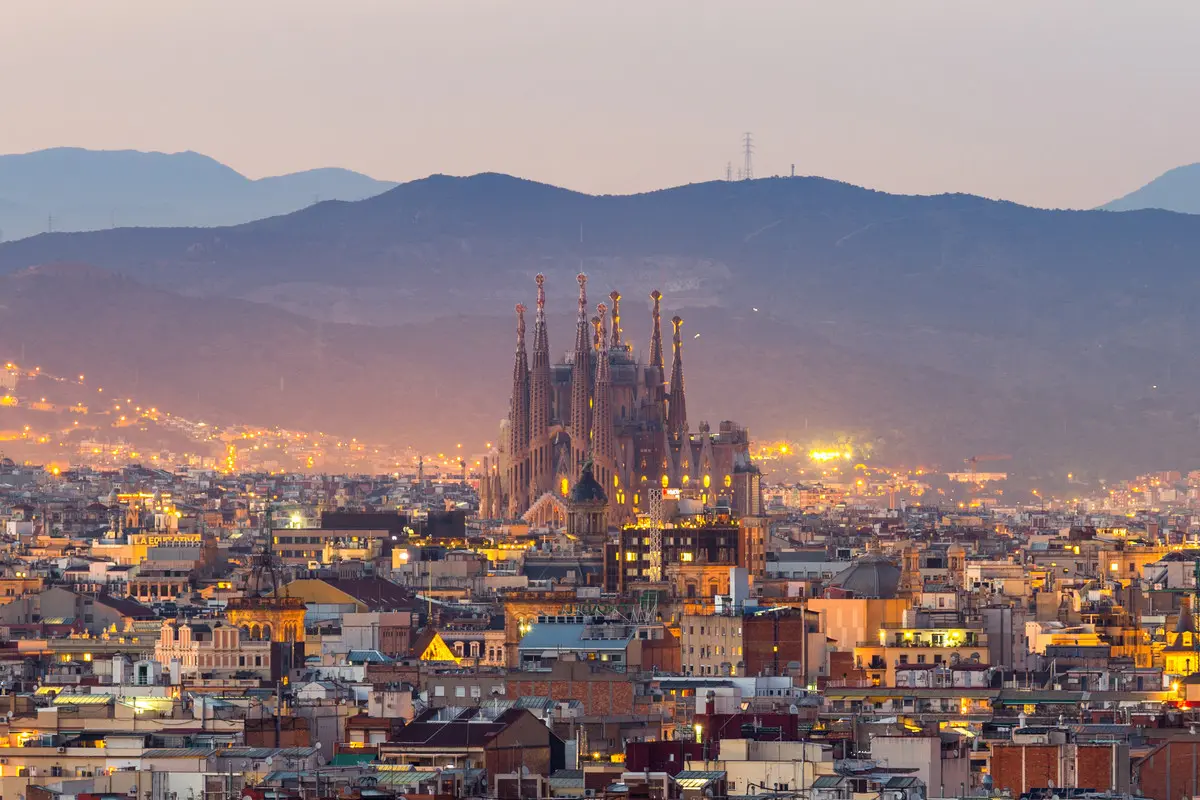
Barcelona is a prominent coastal city in Spain, renowned for its unique architecture and rich artistic charm. Visitors can explore Gaudí’s masterpieces, including the Sagrada Família and Park Güell, as well as the narrow streets of the Gothic Quarter and the lively La Rambla. With its beaches, cuisine, and vibrant culture, Barcelona offers an unforgettable experience for every traveler.
Sagrada Familia An iconic Barcelona basilica designed by Gaudí
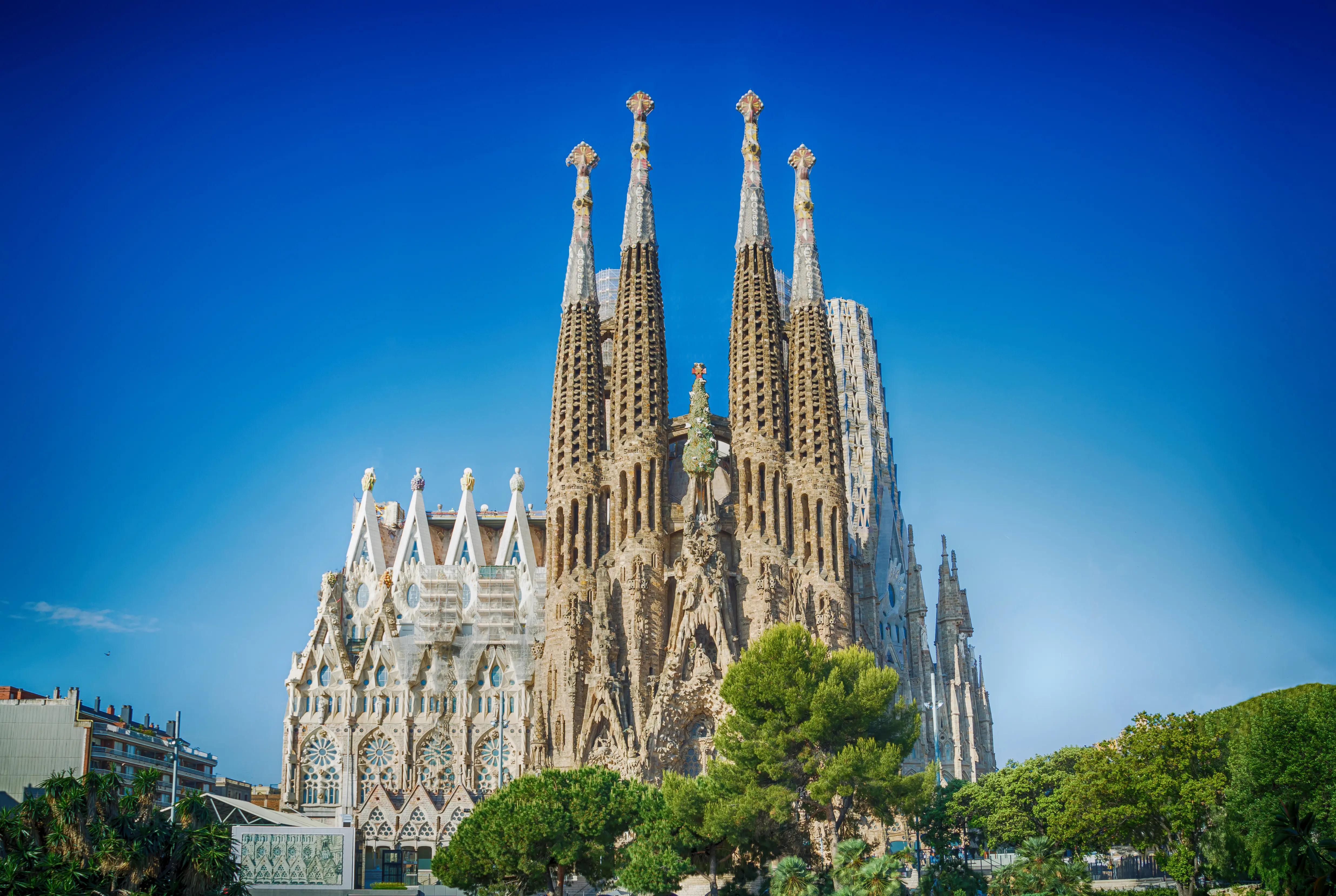
The Sagrada Familia is a landmark basilica in Barcelona, Spain, and a masterpiece designed by the genius architect Gaudí. Its unique exterior, inspired by nature, intricate sculptures, and the colorful light streaming through its stained glass windows create a mystical and awe-inspiring atmosphere that captivates visitors. Construction began in 1882 and continues to this day, making it an iconic symbol of Barcelona and a designated UNESCO World Heritage site.
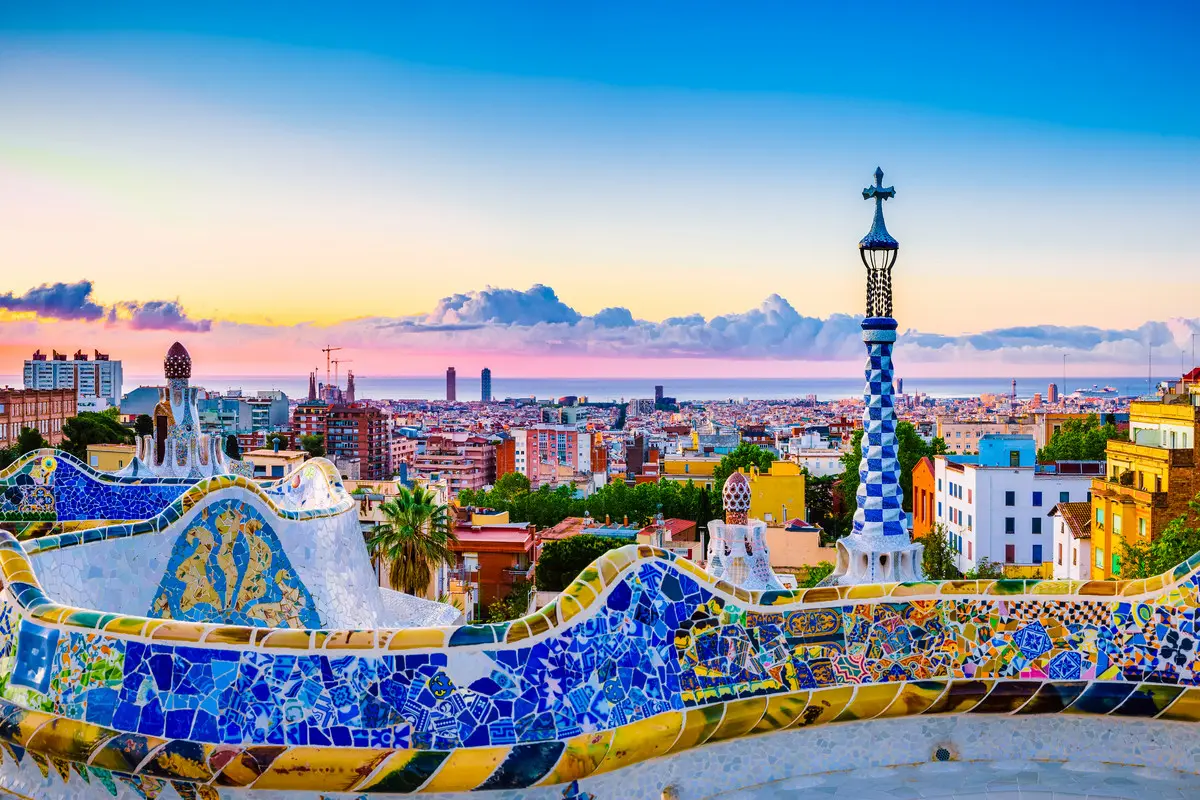
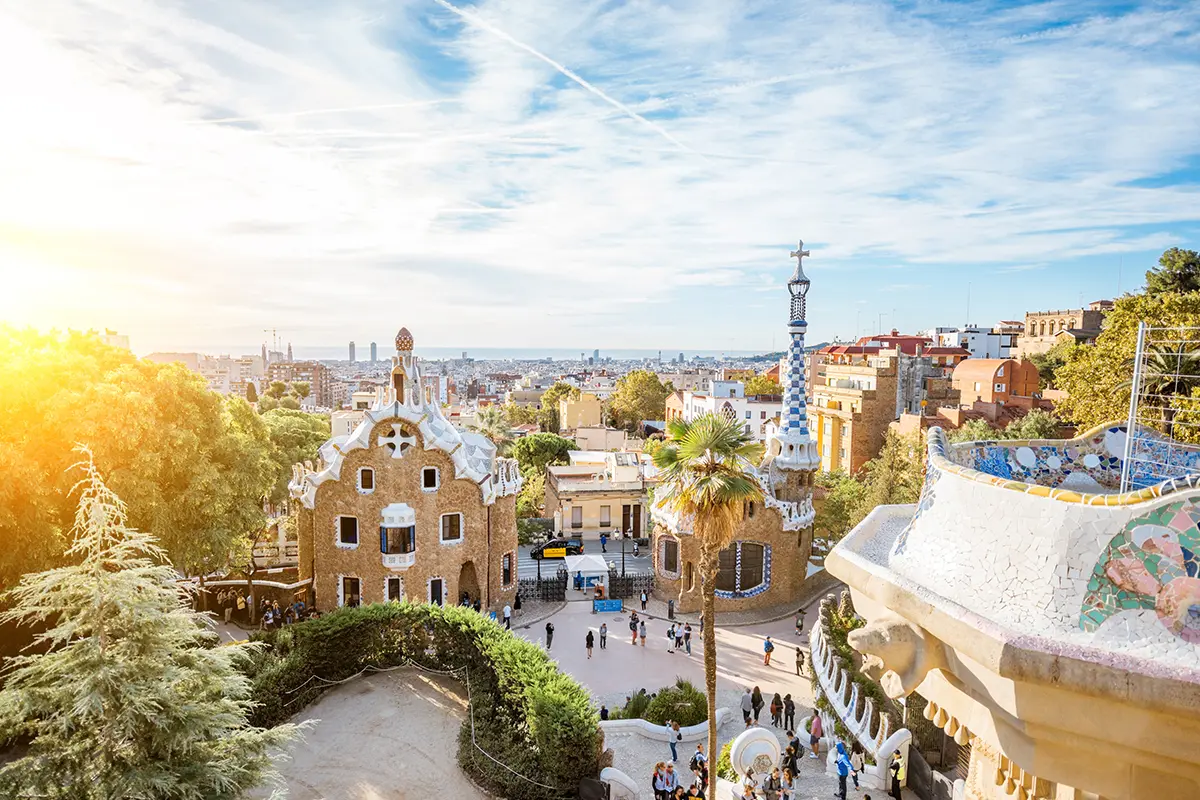
Park Güell A Barcelona park where Gaudí’s creations blend with nature
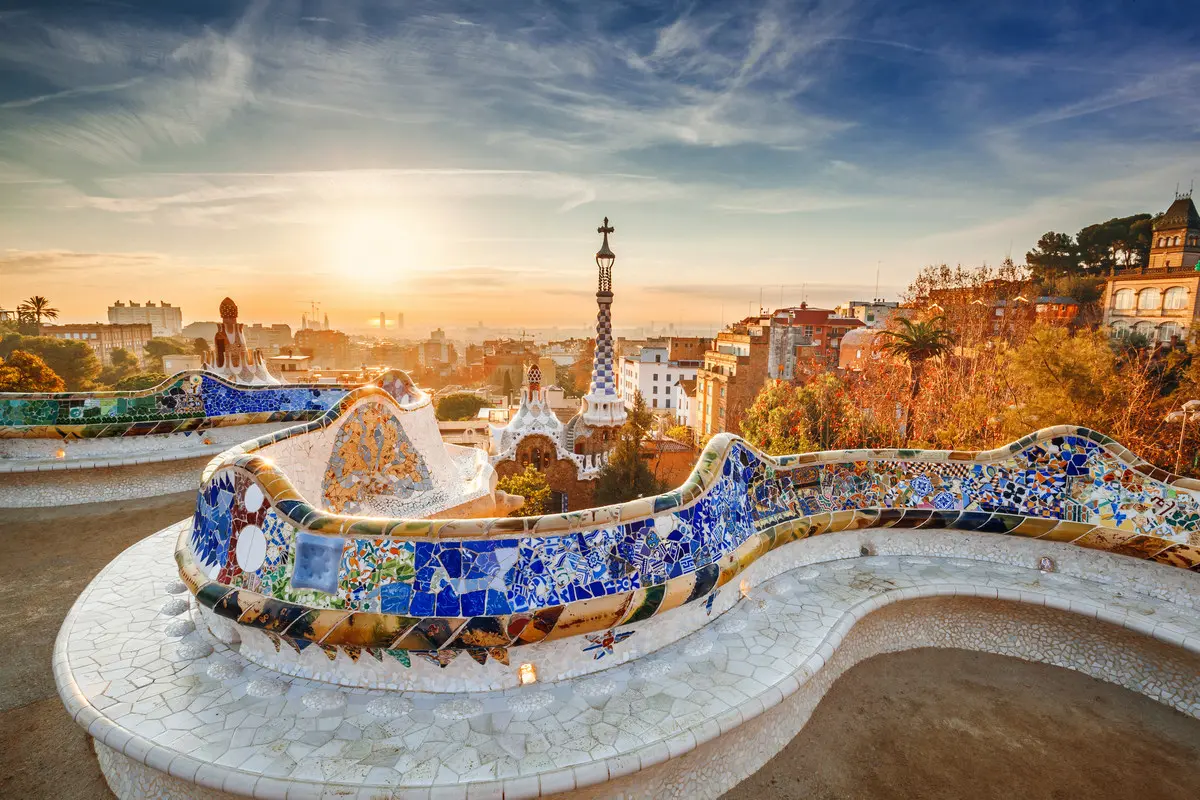
Park Güell is a park in Barcelona, known for its unique architectural designs by Gaudí and vibrant mosaic decorations that harmonize with nature. Its winding benches, iconic sculptures, and viewpoints offering panoramic city views provide visitors with a magical and artistic experience.
Picasso museum The World of Picasso in Barcelona
The Picasso Museum, located in Barcelona, is a space where visitors can view a wide range of Picasso’s works, from his early pieces to creations from different periods. The museum allows visitors to explore the artist’s development and artistic evolution, offering a deep understanding of not only his paintings but also his drawings and prints. It provides a special experience for both Picasso enthusiasts and all art lovers alike.
Gothic Quarter A district famed for medieval architecture and narrow streets
The Gothic Quarter is a historic district in the heart of Barcelona, where medieval buildings, narrow streets, and charming squares blend seamlessly. Walking along streets lined with Gothic cathedrals, palaces, cafés, and shops, visitors can experience the city’s historic charm. The area offers a unique atmosphere where art, history, and modern life come together, making it one of Barcelona’s most iconic attractions.
Plaça Reial A square with fountains, lively cafés, and vibrant nightlife
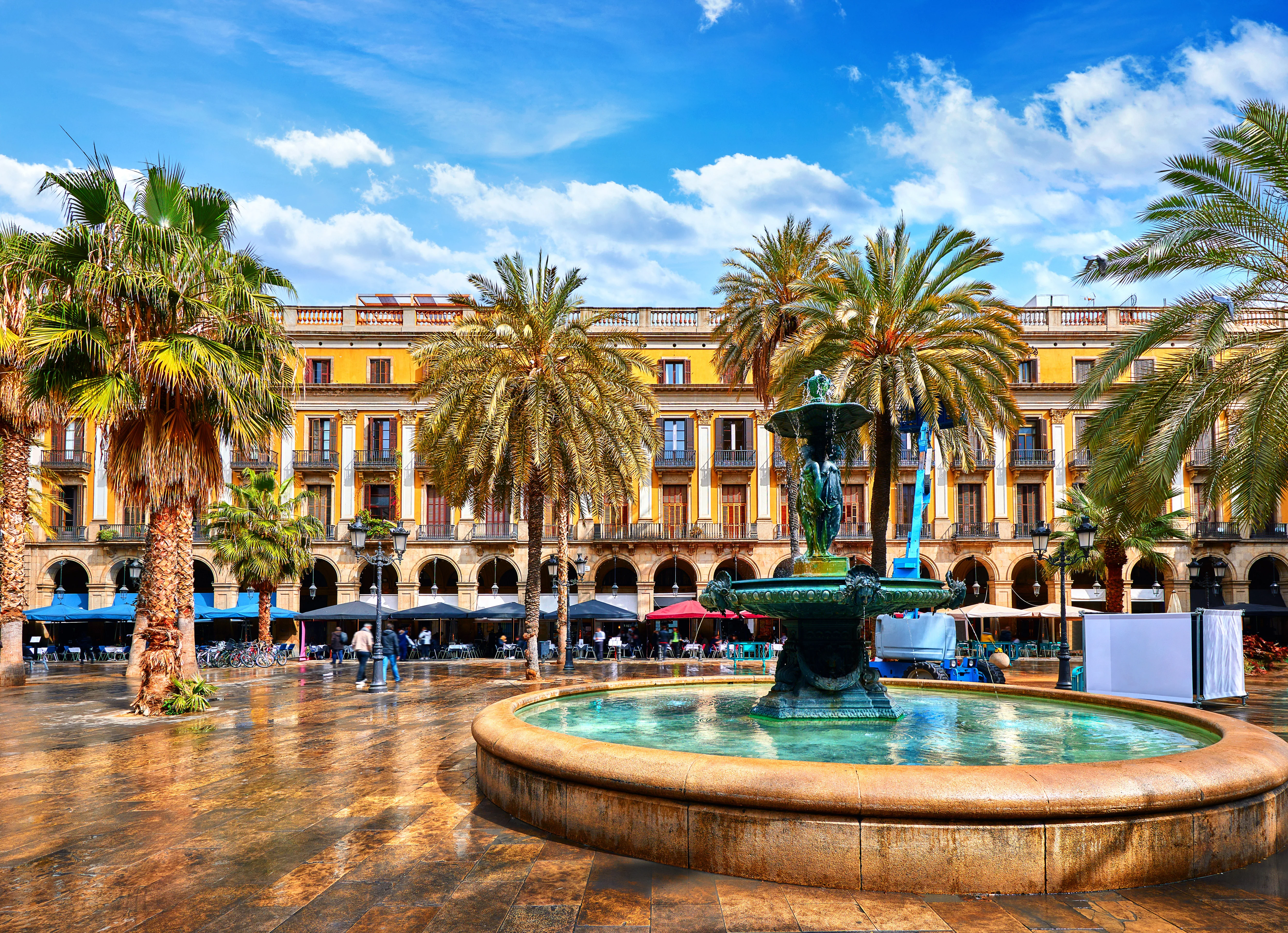
Plaça Reial is a lively square located in Barcelona’s Gothic Quarter, featuring beautiful fountains, ornate street lamps, and outdoor cafés. During the day, it attracts both tourists and locals who gather to relax, while at night, live music and a vibrant atmosphere bring the energy of Barcelona to life, making it a popular destination.
Casa Mila A wave-shaped building designed by Gaudí
Casa Milà is one of Barcelona’s iconic buildings, featuring a wave-like façade and unique curved designs by the genius architect Gaudí. Its interior showcases innovative structures and lighting, while the rooftop offers distinctive sculptures and panoramic city views. As a symbol of modern architecture, it is also a designated UNESCO World Heritage site.
Check-in at the hotel after dinner
⊂ Spain – Barcelona ⊃
▶ After breakfast, leave regrets behind and head to the airport.
▶ After airport procedures, disperse according to personal schedule